
The Hyundai Accent was one of the cheapest new cars you could buy in America for nearly three decades. It offered solid fuel economy, a surprisingly roomy cabin for its size, and maintenance costs that wouldn’t wreck your budget. For first-time buyers and daily commuters, the Accent hit a sweet spot that very few subcompacts could match.
But here’s what matters if you’re shopping for a used one: the gap between the Best & Worst Hyundai Accent Years is enormous. Some model years will run past 200,000 miles without drama. Others will have you replacing transmissions before 80,000 miles. The difference between a reliable Accent and a money pit comes down to knowing which years to buy and which Hyundai Accent years to avoid.
Hyundai Accent Best and Worst Years at a Glance
If you’re in a hurry, here’s the short version.
Best Hyundai Accent years: 2005, 2006, 2007, 2008, 2015, 2016, 2017, 2018, 2019, 2020, 2021
Worst Hyundai Accent years to avoid: 2000, 2001, 2002, 2003, 2004, 2009, 2010, 2011, 2012, 2013, 2014, 2022
The pattern is clear. Early years in most generations tend to be rough, and Hyundai usually works the problems out by the middle of the production run. The 5th generation (2018–2021) is the most consistently reliable stretch in the Accent’s entire history.
Now let’s get into the details.
Hyundai Accent Generations
Before diving into individual years, it helps to understand how the Accent evolved. Each generation brought new engines, transmissions, and platforms, and the problems changed accordingly.
| Generation | Years | Platform | Key Engine |
| 2nd Gen (LC) | 2000–2005 | LC | 1.5L/1.6L Alpha II I4 |
| 3rd Gen (MC) | 2006–2011 | MC | 1.6L Alpha II DOHC I4 |
| 4th Gen (RB) | 2012–2017 | RB | 1.6L Gamma I4 |
| 5th Gen (HC) | 2018–2022 | HC | 1.6L Gamma II GDi I4 |
Understanding this matters because certain problems, particularly the 4-speed automatic transmission failures, carried across multiple generations until Hyundai finally replaced the gearbox in the 5th generation.
Best and Worst Years for 2nd Generation Hyundai Accent (2000–2005)
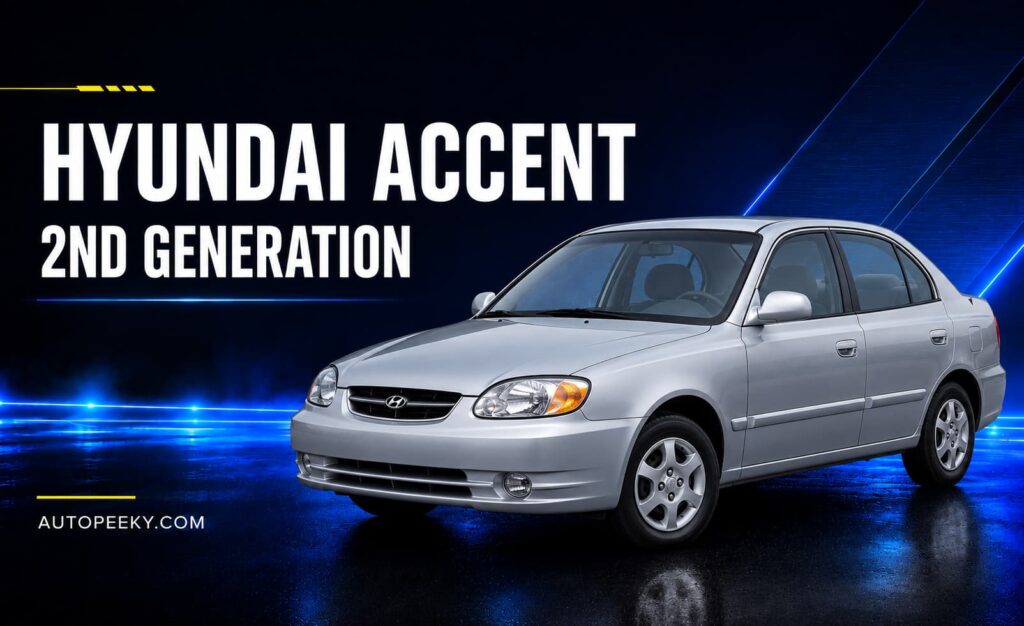
The 2nd generation Accent was Hyundai’s attempt to establish itself in the American budget car market. It succeeded on price but struggled badly with reliability in the early years.
Worst Years: 2000, 2001, 2002, 2003, 2004
All five of these years land in the “avoid” category, and it’s not even close. The 2nd generation Accent from 2000 to 2004 is plagued by transmission problems that make these Hyundai Accent years to be avoided for any used buyer.
The 2000 Hyundai Accent kicked things off with widespread transmission failures. Owners reported intermittent downshifting, slipping between gears, and complete transmission failure. Engine oil leaks and frequent stalling made things worse.
The 2001 model added structural concerns into the mix. Front subframe deterioration and control arm issues raised safety questions that went beyond typical wear and tear for a budget car.
The 2002 Accent introduced an unusual fuel tank defect where the gas pump would prematurely click off, preventing owners from filling the tank completely. Engine overheating and coolant leaks were also frequent complaints on NHTSA’s database for the 2002 Accent.
The 2003 and 2004 models inherited the prior issues and piled on more. The 2003 had premature brake wear and suspension problems. The 2004 received the most NHTSA complaints in the entire generation, largely driven by faulty brake switches and continued transmission failures. Repair estimates for transmission work on the 2004 averaged around $2,250 according to owner reports.
Best Year: 2005
The 2005 Accent is the only year worth considering from this generation. Powered by a 1.6-liter Alpha II DOHC engine producing 104 hp and 106 lb-ft of torque, it came with either a 4-speed automatic or 5-speed manual. Owner satisfaction scores were noticeably higher than previous years, and NHTSA complaint volume dropped significantly.
That said, it wasn’t perfect. Some drivetrain complaints and fuel efficiency concerns still lingered. But compared to 2000–2004, the 2005 model was a major improvement.
Pro tip: If you’re looking at any 2nd generation Accent, always go with the 5-speed manual. The 4-speed automatic transmission is the root cause of most reliability problems in this era.
Best and Worst Years for 3rd Generation Hyundai Accent (2006–2011)
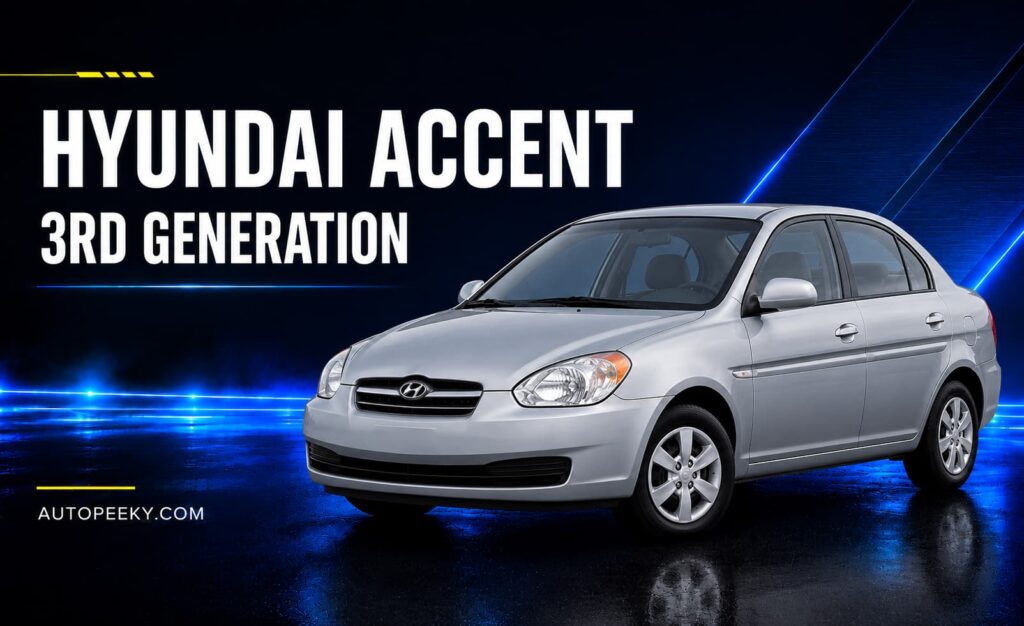
The 3rd generation was a significant design overhaul. Better interior quality, improved ride comfort, and a more refined exterior. The early years delivered on the promise. The later years didn’t.
Best Years: 2006, 2007, 2008
These three years represent the strongest run in 3rd generation Accent reliability. They earned high marks from Edmunds, J.D. Power, and VehicleHistory.
The 2006 Accent came in both sedan and hatchback body styles with a 1.6L DOHC 4-cylinder engine. Fuel economy sat at 28 mpg city and 34 mpg highway, which was competitive for the segment. Owner complaints were minimal, mostly limited to minor electrical issues and interior material quality.
The 2007 and 2008 models continued the trend. Consistent reliability, low complaint volumes, and solid owner satisfaction. These are strong picks for anyone who wants a cheap, dependable commuter car and doesn’t mind driving something from the late 2000s.
Worst Years: 2009, 2010, 2011
Here’s where the 3rd generation falls apart. These are Hyundai Accent years to avoid, and the problems are serious enough that they affect daily drivability.
The 2009 Accent brought powertrain complaints to the forefront. The engine was criticized for lacking power, and the automatic transmission felt sluggish. Service brake problems also became more frequent.
The 2010 model added brake light malfunctions and airbag system issues to the list, leading to a formal Hyundai recall. You can check the full recall history on NHTSA’s 2010 Accent page.
The 2011 Hyundai Accent is arguably one of the worst years across the entire production run. Ignition coil malfunctions caused misfires, poor acceleration, and check engine light issues. Multiple owners reported the car shutting down while driving, which is a genuine safety hazard.
If you’re also cross-shopping Korean compacts, our Best & Worst Kia Forte Years guide uses the same data-backed approach.
Best and Worst Years for 4th Generation Hyundai Accent (2012–2017)
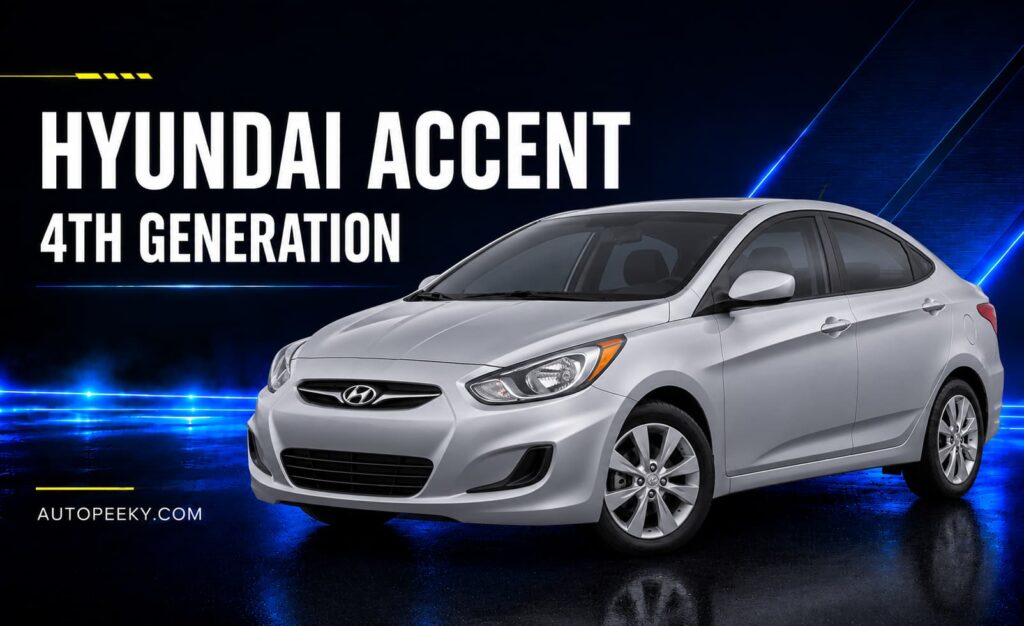
The 4th generation brought a significant design refresh. The Accent looked sharper, got a more modern interior, and offered improved fuel economy. But the early years were rough.
Worst Years: 2012, 2013, 2014
The 2012 through 2014 Hyundai Accent models are among the most problematic in the car’s history. If you’re wondering what year Hyundai Accent to avoid, start here.
The 2012 Accent was plagued by engine and transmission problems. Premature engine wear, transmission slipping, and transmission failure were common complaints. A recall for brake light switch defects, which could cause brake light and cruise control failures, added to the reliability concerns.
The 2013 Hyundai Accent is widely considered the single worst year in this generation. Excessive oil consumption, outright engine failure, and a critical recall for brake fluid leakage from the ABS module (which could lead to engine compartment fires) made this model dangerous and expensive to own.
The 2014 model continued the pattern with premature check engine light illumination and knocking noises from the engine compartment. While slightly better than 2013, it still falls firmly in the “avoid” category.
Best Years: 2015, 2016, 2017
The turnaround in the second half of this generation is dramatic. 2015 through 2017 are excellent Hyundai Accent years to buy.
The 2015 Accent came with an updated 1.6L 4-cylinder producing 138 hp and 123 lb-ft of torque, paired with either a 6-speed manual or 6-speed automatic. EPA fuel economy estimates of 27 mpg city and 38 mpg highway made it one of the most efficient options in the segment. NHTSA received fewer than 100 complaints for this model year, a massive drop from prior years.
The 2016 and 2017 models maintained this reliability standard while adding subtle design refinements. Some owners of the 2016 reported oil consumption and occasional A/C issues, but these were far less severe and less frequent than the engine and transmission nightmares of 2012–2014.
Best and Worst Years for 5th Generation Hyundai Accent (2018–2022)
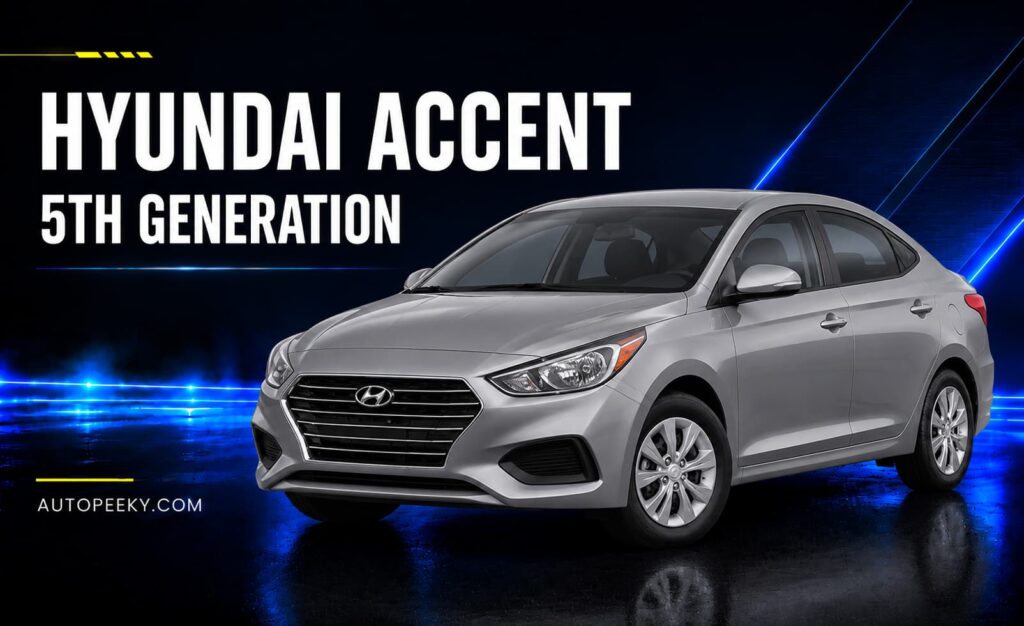
The 5th generation is where Hyundai got nearly everything right. New platform, new transmission, better safety features, and much-improved build quality. This is, by far, the most reliable Hyundai Accent generation.
Best Years: 2018, 2019, 2020, 2021
These four years are the gold standard for the Hyundai Accent. If you want the most dependable Accent you can buy, shop in this range.
The 2018 Accent launched with a 1.6L Gamma II GDi engine making 130 hp and 119 lb-ft of torque, paired with a 6-speed manual or a new CVT option. Forward-collision warning and automated emergency braking became available for the first time in the Accent lineup.
The 2019 model pushed fuel economy even further, achieving up to 33 mpg city and 41 mpg highway. Owner complaints were near zero. J.D. Power rated safety as the 2019 Accent’s strongest attribute.
The 2020 and 2021 models carried forward the same formula with minor interior refinements and continued strong reliability. Complaint volumes on NHTSA for these years were negligible.
Worst Year: 2022
The 2022 Accent is the final model year, and it went out with a whimper rather than a bang. Owner satisfaction scores dropped noticeably compared to 2018–2021. Engine problems and electrical system issues surfaced in NHTSA complaints for the 2022 Accent, and overall ratings on owner review platforms were lower than any other year in this generation.
It’s not catastrophically bad like the 2011 or 2013 models. But within the 5th generation, 2022 is clearly the weakest link and worth avoiding when better options from 2018–2021 are available at similar prices.
Most Common Hyundai Accent Problems Across All Years
Knowing which years to avoid is useful, but understanding the common failure points helps you inspect any used Accent more effectively. Here are the recurring problems that show up across multiple generations.
Automatic Transmission Failure
This is the Accent’s biggest recurring problem. The 4-speed automatic used in the 2nd, 3rd, and 4th generations was prone to slipping, rough shifting, and outright failure. Repair costs averaged around $2,000 for a transmission rebuild. The problem was most severe in the 2000–2004 and 2012–2014 model years. Hyundai addressed this by switching to a CVT in the 5th generation, and transmission complaints dropped dramatically.
Engine Overheating and Coolant Leaks
Cooling system issues affected the 2002, 2004, 2010–2014, and 2017 models most heavily. Coolant leaks could originate from radiator hoses, water pumps, or radiator caps, and left unattended, they led to engine stalling or complete engine failure. No official recall was ever issued for this defect, which means used buyers need to be especially vigilant.
Brake System Defects
Faulty brake master cylinders and brake light switches affected multiple generations. When the master cylinder fails, the brake pedal drops to the floor with no braking pressure, a genuinely dangerous situation. Brake fluid leakage from the ABS module in the 2013 model was severe enough to create fire risk and triggered a recall.
Throttle Position Sensor Failure
This affected later models, particularly the 2007, 2012, and 2015 years. Symptoms include idle surges, sluggish acceleration, and check engine light activation. When the sensor fails, the engine’s air-to-fuel ratio becomes unreliable, leading to rough running and potential engine damage.
Ignition Coil Malfunctions
Primarily a 2011 Accent problem, but also reported in adjacent years. Failed ignition coils caused misfires, loss of power, and engine shutdowns while driving.
How Long Does a Hyundai Accent Last?
With proper maintenance, a Hyundai Accent can last between 200,000 and 250,000 miles. At the national average of 15,000 miles per year, that translates to roughly 13 to 17 years of service.
RepairPal ranks the Accent 5th out of 21 subcompact cars for overall reliability, and annual maintenance costs average around $400 to $500, which is well below the segment average. That low ownership cost is a big part of why the Accent remains popular on the used market.
However, lifespan depends heavily on model year. A well-maintained 2019 Accent is a fundamentally different ownership proposition than a 2013 with the same mileage. Always factor in model year reliability data when evaluating a used Accent’s remaining life.
What to Check Before Buying a Used Hyundai Accent
No competitor guide covers this, but it’s arguably the most practical section for anyone actually shopping for an Accent. Here’s what to look for during inspection.
For 2nd and 3rd generation models (2000–2011):
- Test the automatic transmission thoroughly. Drive at varying speeds and pay attention to shifting behavior, hesitation, and slipping.
- Check for coolant leaks around the radiator, hoses, and water pump.
- Listen for engine knocking, especially at cold startup.
- Verify that brake lights function correctly (brake switch defect).
For 4th generation models (2012–2017):
- Check the oil level and look for signs of excessive oil consumption (bluish exhaust smoke).
- Ask for service records related to the ABS module and brake fluid lines, especially on 2013 models.
- Test the throttle response at various RPMs for sensor issues.
For 5th generation models (2018–2022):
- These are generally clean, but check the electrical system on 2022 models specifically.
- Verify that forward-collision warning and emergency braking systems are functional.
- Get a comprehensive vehicle history report to confirm no accident damage.
This kind of generation-specific inspection matters. The same approach applies when shopping for any used car our Best & Worst Jeep Compass Years guide walks through similar red flags for that model.
Hyundai Accent vs. Alternatives: Is It Still Worth Buying?
The Accent was discontinued after the 2022 model year as Hyundai shifted focus toward SUVs and crossovers. That means if you’re buying one, it’s used. Here’s how it stacks up against its closest competitors on the used market.
Kia Rio: The Accent’s corporate sibling shares most of its platform and powertrain. Reliability is nearly identical, and used prices are comparable. The Rio offers a slightly more refined interior in later years but is otherwise interchangeable with the Accent. If you’re shopping for one, check the other too.
Kia Forte: A step up in size from the Accent but still affordable. The Forte offers more interior space and a more refined driving experience. If you’re deciding between a late-model Accent and a slightly older Forte, our Best & Worst Kia Forte Years breakdown can help you compare.
Toyota Yaris: More expensive on the used market, but Toyota’s reliability reputation is deserved here. The Yaris has fewer problem years than the Accent, but it also has less interior space and a stiffer ride.
Nissan Versa: Generally cheaper than the Accent, but CVT reliability problems in certain Versa years are just as bad as the Accent’s transmission issues. Choose carefully.
Honda Fit: Better cargo versatility and a more engaging drive, but higher used prices. If your budget stretches that far, the Fit is a strong alternative.
For the price, a 2018–2021 Accent is hard to beat. It offers the best combination of reliability, fuel economy, and low ownership cost in the subcompact segment.
Hyundai Accent Average Resale Values by Generation
Resale values vary significantly by generation and condition, but here’s a rough guide based on current used market data.
| Model Year Range | Average Used Price Range | Notes |
| 2000–2005 | $1,500 – $3,500 | Low prices but high risk of costly repairs |
| 2006–2008 | $2,500 – $5,000 | Decent value if well-maintained |
| 2009–2011 | $2,000 – $4,500 | Avoid unless deeply discounted |
| 2012–2014 | $3,500 – $6,500 | Risky; engine/transmission concerns |
| 2015–2017 | $5,000 – $9,000 | Strong value for the reliability |
| 2018–2021 | $8,000 – $14,000 | Best overall value proposition |
| 2022 | $10,000 – $15,000 | Overpriced for the reliability tier |
The sweet spot for value is the 2015–2017 range. You get proven reliability at a price point that’s well below the 5th generation models. If your budget allows it, the 2018–2021 range is the safest bet overall.
Is the Hyundai Accent Discontinued?
Yes. Hyundai discontinued the Accent after the 2022 model year. The decision was part of Hyundai’s broader strategy to shift production toward SUVs, crossovers, and electric vehicles. The Accent’s departure left a gap in Hyundai’s subcompact lineup, though the Hyundai Venue partially fills that role as a small crossover.
For buyers, the discontinuation actually creates an opportunity. Used Accent prices haven’t spiked because the car was never a collector’s item, and the aftermarket parts supply remains strong. Servicing a used Accent should remain affordable for years to come.
Conclusion
The data points to a clear answer. If you want the safest, most reliable used Hyundai Accent, buy a 2018 or 2019 model. These give you the newest platform, the best fuel economy, modern safety features, and near-spotless reliability records. They’re more expensive than older models, but the reduced repair risk more than justifies the premium.
On a tighter budget, the 2015–2017 models are excellent. They fixed the problems that plagued the 2012–2014 years and offered solid reliability at a lower price point.
Avoid the 2009–2014 range entirely unless the price is extremely low and you’re comfortable with the risk of major engine or transmission work. And steer clear of anything from 2000–2004 unless it’s a manual-transmission 2005.
Shopping for a used car is always a calculated risk. But with the right Hyundai Accent year, that risk is smaller than almost anything else in the subcompact segment.
Looking for more model-year breakdowns like this? Browse our full library of best and worst year guides to find the right car for your budget. You might also find our Toyota Venza Best and Worst Years and Best & Worst Toyota Avalon Years guides useful if you’re comparing options across segments.
FAQ’s
What are the Hyundai Accent years to avoid?
The worst Hyundai Accent years to avoid are 2000, 2001, 2002, 2003, 2004, 2009, 2010, 2011, 2012, 2013, 2014, and 2022. These model years have the highest NHTSA complaint volumes and the most serious reliability problems, including transmission failures, engine overheating, brake defects, and ignition coil malfunctions. The 2011 and 2013 models are widely considered the two worst individual years.
What is the most reliable Hyundai Accent year?
The 2019 Hyundai Accent is arguably the most reliable individual year. It earned outstanding ratings from J.D. Power, Vehicle History, and Cars.com, with near-zero NHTSA complaints. It also achieved the best fuel economy in Accent history at 33 mpg city and 41 mpg highway. The 2018, 2020, and 2021 models are nearly as strong.
How long does a Hyundai Accent engine last?
A Hyundai Accent engine typically lasts between 200,000 and 250,000 miles with regular maintenance. Factors like oil change frequency, driving habits, and climate conditions affect longevity. The 5th generation models (2018–2021) have shown the fewest engine-related complaints, while the 2012–2014 models had the most premature engine failures.
Is a used Hyundai Accent a good car to buy?
Yes, but only if you pick the right year. The 2015–2021 Hyundai Accent models offer excellent reliability, low maintenance costs (averaging $400–$500 per year), and strong fuel economy. Avoid the 2009–2014 and pre-2005 models, where transmission and engine issues can turn a cheap purchase into an expensive repair project.
What year Hyundai Accent has transmission problems?
Transmission problems are most common in the 2000–2004, 2009–2011, and 2012–2014 model years. The culprit in earlier models is the 4-speed automatic transmission, which was prone to slipping, rough shifting, and complete failure. Repair costs average around $2,000. If you’re buying an older Accent, a manual transmission model is significantly more reliable.
Why was the Hyundai Accent discontinued?
Hyundai discontinued the Accent after 2022 as part of a company-wide shift toward SUVs, crossovers, and electric vehicles. Declining sedan sales across the industry made the Accent less viable as a new-car offering. However, the used Accent market remains strong, and parts availability is expected to stay consistent for years.