
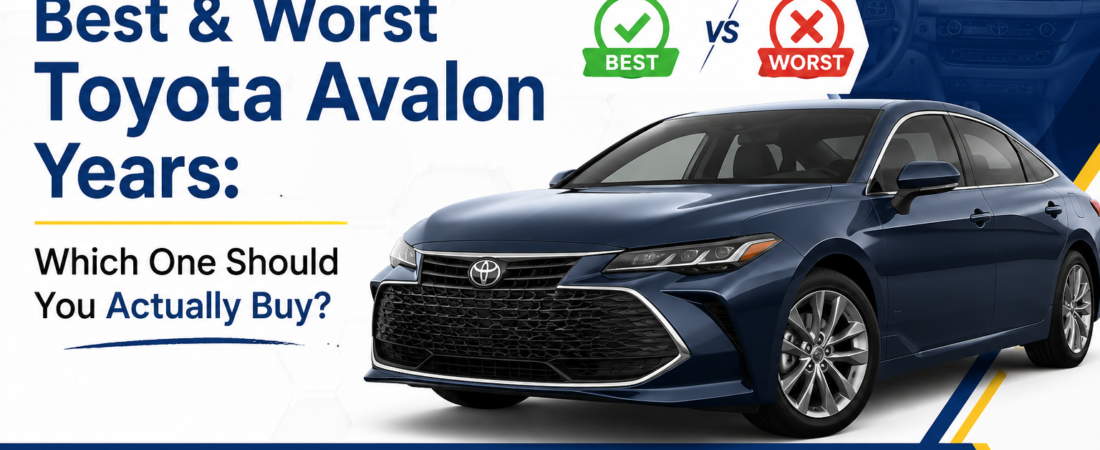
If you’re shopping for a used Toyota Avalon, you already know what draws people to this car: spacious cabin, smooth ride, and Toyota reliability. But here’s the thing nobody tells you upfront: not every Avalon year delivers on that promise. Some model years are quietly excellent, reliable, well-sorted, and worth every penny on the used market. Others have a troubling track record of engine sludge, unintended acceleration, steering failures, and costly recalls that can turn your “smart buy” into a financial headache.
This guide cuts through the noise. We’ve dug into NHTSA complaint data, Consumer Reports reliability scores, real owner reviews, recall histories, and ownership cost records to tell you exactly which Toyota Avalon years to avoid and which ones are genuinely worth your money.
Best & Worst Toyota Avalon Years: A Quick Overview by Generation
Before we call out the winners and losers, it helps to know the Avalon’s timeline. Toyota produced the Avalon across four distinct generations, each with its own strengths, growing pains, and problem years.
| Generation | Years Covered |
| 2nd Generation (XX20) | 2000–2004 |
| 3rd Generation (XX30) | 2005–2012 |
| 4th Generation (XX40) | 2013–2018 |
| 5th Generation (XX50) | 2019–2022 |
Each generational jump brought design refreshes and new features but also, at least in the early years, a fresh set of teething problems. That’s the pattern you’ll see repeated throughout this guide.
Toyota Avalon Best & Worst Years at a Glance
Here’s your quick-reference breakdown before we go deeper:
| Generation | ✅ Best Years | ⚠️ Neutral Years | ❌ Worst Years |
| 2nd Gen (XX20) | 2000, 2001, 2002 | — | 2003, 2004 |
| 3rd Gen (XX30) | 2011, 2012 | 2009, 2010 | 2005, 2006, 2007, 2008 |
| 4th Gen (XX40) | 2016, 2017, 2018 | — | 2013, 2014, 2015 |
| 5th Gen (XX50) | 2020 | 2021, 2022 | 2019 |
The short answer if you’re in a hurry: The 2016–2018 and 2011–2012 Avalons are the sweet spot for used buyers. The 2005–2008 and 2013–2015 ranges are the ones most worth skipping.
2nd Generation Toyota Avalon (2000–2004): Best & Worst Years
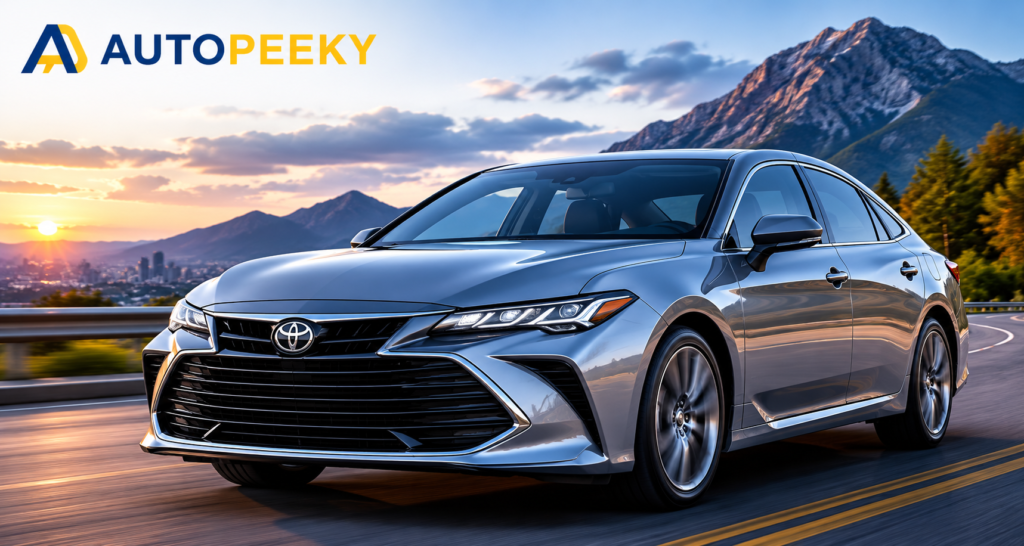
The second-generation Avalon arrived for the new millennium with a more powerful 3.0-liter V6 engine, upgraded safety features, and a more refined interior. It was a solid step forward but only for the first few years.
Best Years: 2000, 2001, 2002
The early years of this generation hold up well. The 3.0-liter 1MZ-FE V6 produced a capable 210 horsepower and was paired with a smooth 4-speed automatic transmission. Toyota tuned these cars for comfort, and they delivered these model years earning some of the highest owner satisfaction ratings of any Avalon generation on both Kelley Blue Book and Edmunds.
Standard features included 4-wheel disc ABS, front torso airbags, electroluminescent gauges, and 15-inch alloy wheels. Optional upgrades like Vehicle Stability Control and a JBL audio system made them genuinely well-equipped for their era.
What to watch for even in these good years:
- The 2000 and 2001 models had some early reports of engine and steering issues common to the whole generation
- The 2002 Avalon had some complaints about faulty occupant detection sensors
These are minor compared to what came next, but worth knowing about before you buy.
Worst Years: 2003, 2004 – Toyota Avalon Years to Avoid
The 2003 and 2004 facelifted Avalons picked up some serious problems that make them hard to recommend on the used market.
Steering failures were the biggest concern. Multiple owners reported power steering loss, and in 2010 Toyota issued a recall across all 2000–2004 Avalon models for a defective steering lock bar casting that could break and lock the wheel while driving a serious crash risk.
The 2004 Avalon added its own headache: a recall involving the crankshaft pulley, which could shed the power steering belt and cause sudden loss of steering assist.
Unintended acceleration was another documented problem, with owners reporting the car surging forward even while stationary.
Engine sludge – the gradual thickening and buildup of engine oil plagued these years and could cause catastrophic engine damage if oil changes weren’t meticulous.
Bottom line: Skip the 2003 and 2004. The extra features from the facelift aren’t worth the baggage.
3rd Generation Toyota Avalon (2005–2012): Best & Worst Years
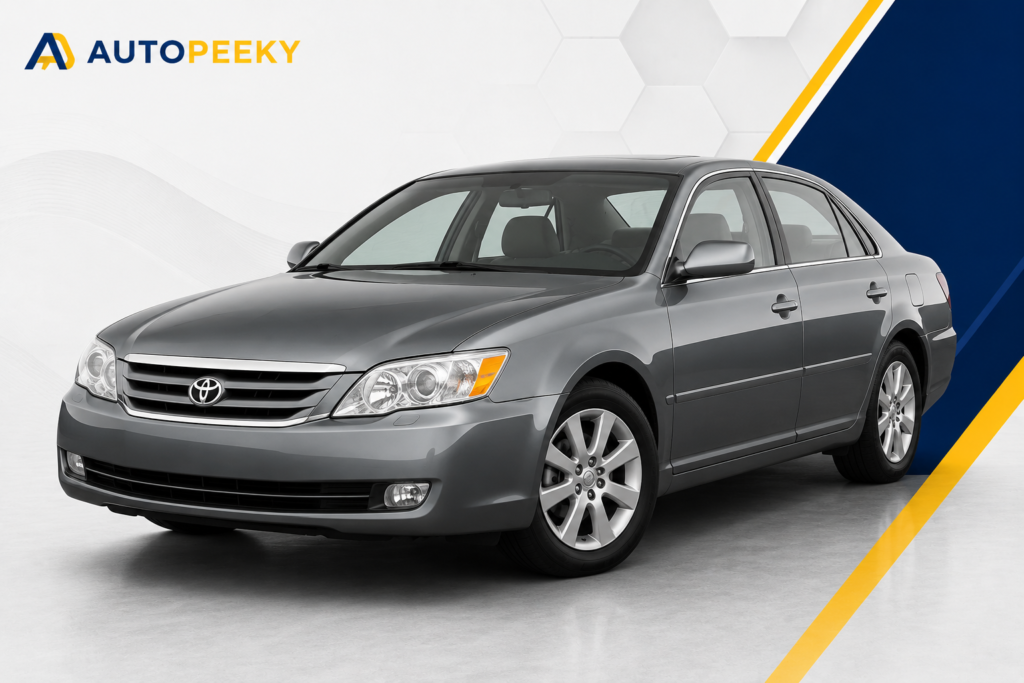
The third-generation Avalon brought a bigger, more modern design and an upgraded 3.5-liter V6. But this generation had the roughest start of any four straight problem years right out of the gate.
Worst Years: 2005, 2006, 2007, 2008 – Avalon Years to Avoid
This stretch is the most problematic in the Avalon’s entire history. If there’s one group of years to steer clear of, it’s here.
Unintended acceleration came back as a major theme. In 2010, Toyota recalled certain 2005–2010 Avalon models over an accelerator pedal that could stick or be slow to return to idle, a terrifying problem that led to real accidents.
Steering problems reappeared in a new form: rattling, and in some cases, the steering column locking up during active driving due to a locking lever failure.
The 2006 Avalon had significant oil leak issues, rubber VVT-i oil lines, timing covers, and oil hoses were all reported sources. This wasn’t just an inconvenience; it was a recipe for engine damage if left unchecked. The problem worsened in 2007 and 2008.
The 2008 Avalon became notorious for intermittent headlight failure, a safety hazard that had NHTSA tracking complaints closely.
All four of these years also had elevated NHTSA complaint volumes across multiple systems. Given how many better alternatives exist within the Avalon lineup, there’s no real reason to gamble on a 2005–2008 model.
Neutral Years: 2009, 2010
The 2009 and 2010 models benefited from Toyota addressing many of the early problems, but they still carried some of the baggage from previous years. NHTSA complaint numbers dropped considerably, which is a good sign but a thorough pre-purchase inspection is still strongly recommended.
These are acceptable buys if priced right, but not our top picks.
Best Years: 2011, 2012
By 2011, Toyota had the third-generation Avalon sorted out. These two model years are genuinely excellent used car buys.
The 3.5-liter 2GR-FE V6 producing 280 horsepower was paired with a refined 5-speed automatic, and fuel economy improved to around 34 mpg on the highway. The 2011 refresh brought updated styling and a simplified two-trim lineup (base Avalon and Limited).
Feature-wise, these years gained touchscreen navigation, dual-zone climate control, advanced JBL audio, blind-spot monitoring, and rear cross-traffic alert technology that still holds up today.
Consumer Reports rated 2011 and 2012 with their highest reliability and owner satisfaction scores in the generation. J.D. Power averaged 86/100 across these years.
If you want a third-generation Avalon, 2011 or 2012 is the only answer.
4th Generation Toyota Avalon (2013–2018): Best & Worst Years
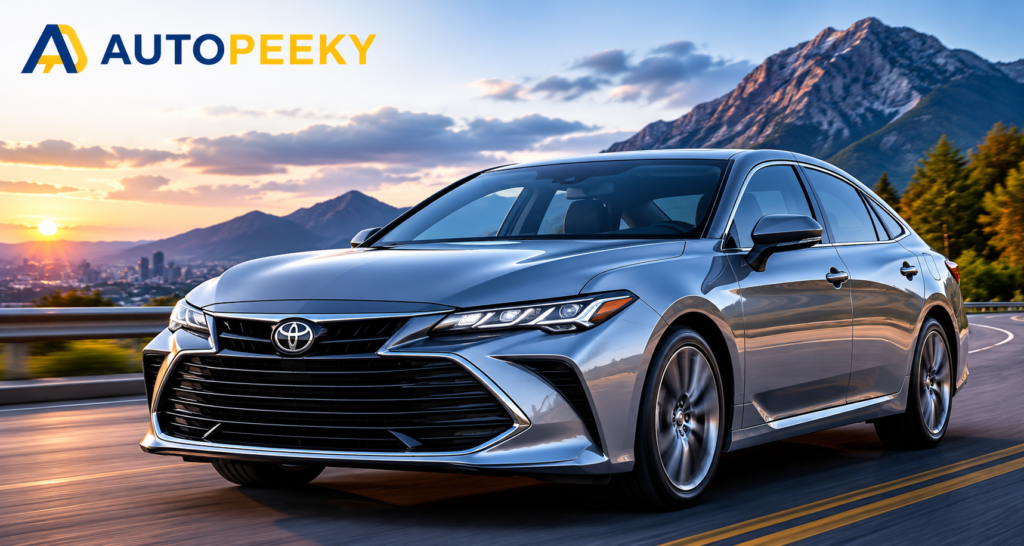
The fourth generation was Toyota’s most ambitious Avalon yet sharper styling, a sportier driving feel, and modern driver assistance technology. But as with previous generations, the early years got a bit rocky.
Worst Years: 2013, 2014, 2015 – Toyota Avalon Years to Avoid
The 2013 Avalon launched with enthusiasm but quickly ran into issues. Vehicle speed control complaints were significant, with owners experiencing unintended acceleration and sudden stalls.
Airbag malfunctions also appeared, including airbags failing to deploy when they should have, along with sunroof water leaks that became a common gripe on forums and owner review sites.
The 2014 and 2015 models inherited these issues and introduced a concerning new one: braking problems. Some owners reported longer stopping distances and unexpected automatic brake activations triggered by the Pre-Collision System (PCS) misreading road conditions. This led to a recall that specifically addressed the PCS logic.
Three straight first-generation years with safety-related recalls across multiple systems is a hard pattern to ignore.
Best Years: 2016, 2017, 2018
These three years represent the best of the fourth generation and arguably the best Avalon years you can buy today on the used market.
Toyota addressed the early problems thoroughly by 2016, adding a revised suspension for improved ride quality, new wheel designs, and making Toyota Safety Sense P standard which includes pre-collision warning, automatic emergency braking, lane departure alert, and automatic high beams.
The powertrain is excellent: a 3.5-liter V6 paired with a 6-speed automatic, returning around 34 mpg on the highway. If you opt for the Avalon Hybrid, you’re looking at 40 mpg city / 39 mpg highway outstanding numbers for a full-size sedan.
Interior quality, infotainment connectivity, and long-term reliability scores all peaked during these years. If your budget allows for a 2016–2018, this is the range to target.
5th Generation Toyota Avalon (2019–2022): Best & Worst Years
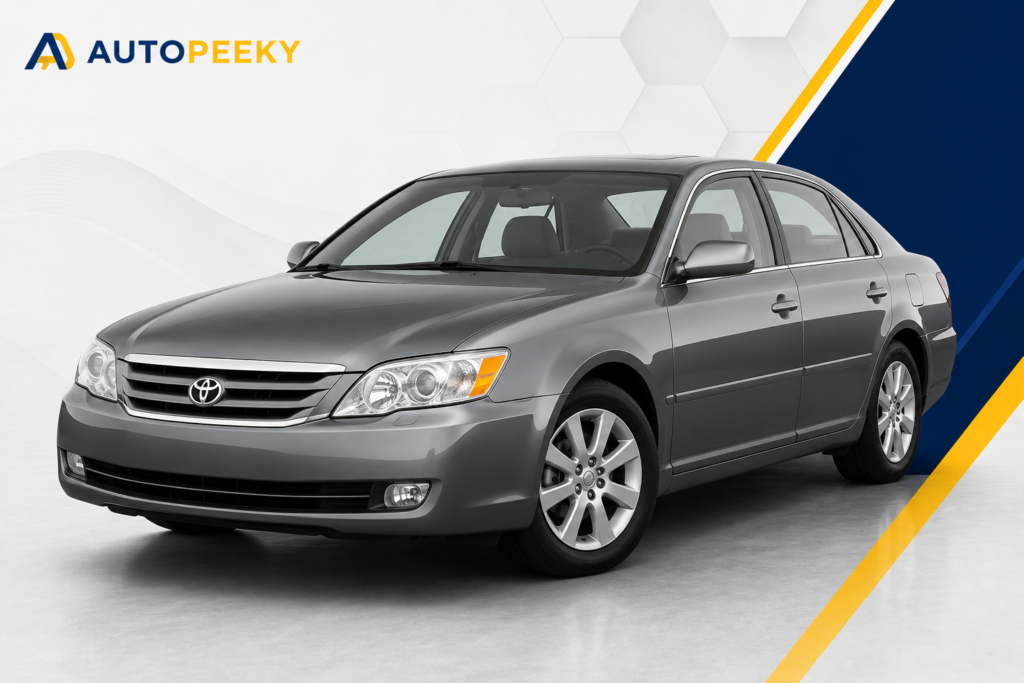
The fifth and final generation of the Avalon brought bold new styling, a more athletic chassis, and class-leading technology. It was also the generation that ended Toyota’s Avalon production in the US; the 2022 model was the last.
Worst Year: 2019 – Toyota Avalon Year to Avoid
The 2019 debut year stumbled out of the gate. Transmission complaints were the most common complaint owners described the transmission jerking and slipping, particularly at low speeds, which was frustrating in an otherwise premium sedan.
A significant fuel pump recall issued in 2020 affected some 2019 models, with the risk of engine stalling at speed. Stalling on a highway is not a minor inconvenience, it’s a safety event.
Despite its attractive new styling and genuinely improved tech, the 2019 Avalon was not ready for daily life without getting burned by these early flaws.
Best Year: 2020
The 2020 Avalon is the standout year of this generation. Toyota acted quickly on feedback from 2019, and the improvements show.
Under the hood: a 3.5-liter V6 producing 301 horsepower paired with an 8-speed automatic. The hybrid option, a 2.5-liter inline-four combined with an electric motor, returned an extraordinary 32 mpg city / 52 mpg highway in Consumer Reports testing.
The technology suite is genuinely impressive: Apple CarPlay and Android Auto, a 9-inch touchscreen, JBL premium audio, wireless charging, and a comprehensive suite of driver assistance features as standard.
Reliability scores on Consumer Reports and owner satisfaction on both Edmunds and KBB ranked the 2020 Avalon at the top of its generation.
Neutral Years: 2021, 2022
The 2021 and 2022 Avalons are solid, dependable cars. Toyota continued refining the lineup with enhanced adaptive cruise control, pedestrian detection, and lane-keeping assist across both years. No major issues were introduced.
They earn a “neutral” rating rather than “best” simply because they didn’t introduce meaningful improvements over the excellent 2020. That said, if you find a well-priced 2021 or 2022 especially the hybrid it’s a very sound buy.
Toyota Avalon Year-by-Year Summary: Quick Reference
| Year | Rating | Key Notes |
| 2000 | ✅ Best | Reliable, solid V6, high owner satisfaction |
| 2001 | ✅ Best | Minor steering/engine reports but overall strong |
| 2002 | ✅ Best | Highest KBB/Edmunds rating of the generation |
| 2003 | ❌ Avoid | Steering lock recall, airbag issues |
| 2004 | ❌ Avoid | Crankshaft pulley recall, power steering failure risk |
| 2005 | ❌ Avoid | Acceleration recall, steering column failures |
| 2006 | ❌ Avoid | VVT-i oil leaks, sticking accelerator |
| 2007 | ❌ Avoid | Continued oil leaks, elevated complaints |
| 2008 | ❌ Avoid | Headlight failures, high NHTSA complaint volume |
| 2009 | ⚠️ Neutral | Improved, but residual issues linger |
| 2010 | ⚠️ Neutral | Decent but still carries some 2009 baggage |
| 2011 | ✅ Best | Refreshed styling, top reliability scores |
| 2012 | ✅ Best | Outstanding J.D. Power and Consumer Reports scores |
| 2013 | ❌ Avoid | Speed control issues, airbag complaints |
| 2014 | ❌ Avoid | Braking problems added to 2013 issues |
| 2015 | ❌ Avoid | PCS recall, continued brake-related complaints |
| 2016 | ✅ Best | TSS-P standard, suspension revised, strong reliability |
| 2017 | ✅ Best | Excellent reliability, refined and well-equipped |
| 2018 | ✅ Best | Last of 4th gen — well-sorted and highly rated |
| 2019 | ❌ Avoid | Transmission jerking, fuel pump recall |
| 2020 | ✅ Best | Best 5th gen year, strong V6 and hybrid options |
| 2021 | ⚠️ Neutral | Solid but no significant improvements over 2020 |
| 2022 | ⚠️ Neutral | Final year, consistent and dependable |
What Are the Most Common Toyota Avalon Problems to Watch For?
Regardless of which year you’re looking at, here are the recurring issues that pop up across the Avalon’s history things to inspect closely before buying any used Avalon:
1. Engine Sludge (2000–2004 models especially) Improper or infrequent oil changes in these years can cause oil to thicken and clog engine passages. Always ask for a full maintenance history.
2. Steering System Issues Multiple generations had power steering-related complaints and at least one major recall. Check for any vibration, looseness, or unusual resistance in the steering.
3. Transmission Behavior (2019 especially) The 5th gen’s early transmission tune was noticeably rough at low speeds. Test drive thoroughly and watch for hesitation, slipping, or jerking.
4. Unintended Acceleration This was a widespread Toyota issue in the 2000s. Even repaired vehicles should be driven carefully to ensure throttle response feels natural.
5. Airbag System Recalls Several Avalon years were subject to Takata airbag recalls (an industry-wide issue). Always verify VIN at NHTSA.gov to confirm all open recalls have been resolved before purchase.
Our Top Pick: Which Toyota Avalon Should You Buy?
If we had to give one recommendation: the 2016–2018 Toyota Avalon is the best used buy in the model’s entire history.
Here’s why:
- All of the 4th generation’s early problems had been resolved
- Toyota Safety Sense P is standard (pre-collision, automatic braking, lane assist)
- The V6 powertrain is smooth, well-refined, and reliable
- These years offer excellent resale value without being overpriced
- Strong long-term reliability data with low NHTSA complaint volumes
If the budget is tight, the 2011 or 2012 Avalon is a fantastic alternative, older but genuinely well-sorted and backed by strong owner satisfaction data.
And if you want something newer, the 2020 Avalon (especially the hybrid) is outstanding, efficient, powerful, and the most technologically advanced Avalon ever made.
Conclusion
The Toyota Avalon is a genuinely excellent used car, spacious, refined, and capable of lasting well over 200,000 miles when properly cared for. But like any vehicle with a 20+ year production run, the quality varies significantly from one model year to the next.
Stick to AutoPeeky recommended years 2016–2018, 2011–2012, or 2020 and you’re getting one of the best-value full-size sedans on the used market today.
Avoid the first year of any generation if you can, and be especially cautious about the 2005–2008 and 2013–2015 ranges where recall activity and owner complaints were highest.
Do your due diligence, check the VIN at NHTSA.gov, get an independent inspection, and you’ll likely be very happy with your Avalon for years to come.
FAQ’s
What Toyota Avalon years should I avoid?
The Toyota Avalon years most worth avoiding are 2003–2004, 2005–2008, 2013–2015, and 2019. These model years have the highest rates of owner complaints, NHTSA recalls, and documented reliability issues across steering, brakes, transmission, and engine systems.
What is the best year for a used Toyota Avalon?
The best years for a used Toyota Avalon are 2016, 2017, and 2018. They combine a sorted, reliable powertrain with standard Toyota Safety Sense driver assistance technology and strong long-term owner satisfaction scores. The 2011, 2012, and 2020 are also excellent options.
Is the 2019 Toyota Avalon a good buy?
The 2019 Toyota Avalon is generally not recommended as a used purchase. It was the first year of the fifth generation and had documented transmission issues at low speeds, along with a fuel pump recall. The 2020 model is a significantly better choice for only marginally more money.
How many miles will a Toyota Avalon last?
A well-maintained Toyota Avalon can last 250,000–300,000 miles. The key word is “well-maintained” especially on earlier models prone to engine sludge, regular oil changes on time are critical to longevity.
Is the Toyota Avalon reliable overall?
Yes, the Toyota Avalon is considered an above-average reliable car. Consumer Reports consistently rated it well, particularly in the 2011–2012 and 2016–2020 model years. Some individual model years are exceptions to that reliability reputation, which is exactly why this guide exists.
What is the most common problem with the Toyota Avalon?
Across all generations, the most commonly reported Toyota Avalon problems include power steering issues, unintended acceleration (particularly in 2000s models), engine sludge in early V6 engines, and airbag system malfunctions. The 2019 model added transmission jerking to the list.
Is the Toyota Avalon Hybrid worth buying?
Yes the Toyota Avalon Hybrid is an excellent value in the used market, particularly the 2020 hybrid, which delivers around 43 combined mpg. The hybrid system uses a proven Toyota powertrain and has a strong reliability track record. Look for 2016–2018 hybrid models as well for a more affordable entry point.
Which is better: the Toyota Avalon or Toyota Camry?
For buyers who prioritize interior space, a smoother ride, and a quieter cabin, the Avalon wins. The Camry is smaller, easier to park, and usually cheaper to buy and run. Both are reliable, but the Avalon targets a slightly older, comfort-focused buyer who wants a near-luxury feel at a mainstream Toyota price.