
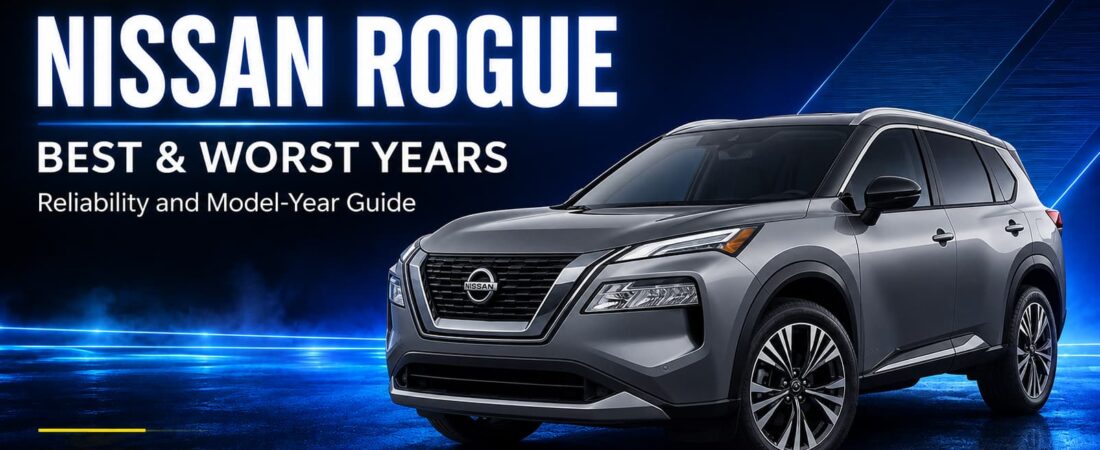
The Nissan Rogue is one of America’s best-selling compact SUVs and for good reason. It’s comfortable, fuel-efficient, practical, and competitively priced. But if you’re shopping the used market, there’s one thing you need to know before you get serious about any specific Rogue: the best & worst Nissan Rogue years are separated by a reliability gap that can cost you thousands of dollars.
The Rogue’s single biggest issue, a recurring, well-documented CVT transmission problem, has plagued multiple generations and triggered a class-action lawsuit against Nissan. Some Rogue model years are firmly in the danger zone. Others, particularly from 2019 onward, have shaken that reputation and are genuinely solid compact SUV buys.
The team at AutoPeeky has dug through NHTSA complaint databases, Consumer Reports reliability data, J.D. Power owner satisfaction scores, class-action lawsuit records, and thousands of real owner accounts to give you one honest, data-backed answer: which Nissan Rogue years should you buy and which should you walk away from?
Nissan Rogue Generations
The Rogue has run through three generations since its 2008 debut, each with distinct platform changes and reliability patterns.
| Generation | Years | Platform |
| 1st Generation (S35) | 2008–2013 | Nissan C platform |
| 2nd Generation (T32) | 2014–2020 | Nissan CMF-CD platform |
| 3rd Generation (T33) | 2021–Present | New CMF-CD revised platform |
One important note for shoppers: the Nissan Rogue Sport (2017–present) is a separate, smaller model based on the Nissan Qashqai platform. It shares the Rogue name but is a different vehicle. This guide covers the standard Rogue. If you’re cross-shopping both, our analysis here focuses strictly on the full-size Rogue.
Best & Worst Nissan Rogue Years
Here is AutoPeeky’s complete year-by-year ranking across all three generations:
| Generation | ✅ Best Years | ⚠️ Neutral Years | ❌ Worst Years |
| 1st Gen (2008–2013) | 2011, 2012 | — | 2008, 2009, 2010, 2013 |
| 2nd Gen (2014–2020) | 2019, 2020 | 2017, 2018 | 2014, 2015, 2016 |
| 3rd Gen (2021–Present) | 2022, 2023, 2024 | — | 2021 |
The fast answer: The Nissan Rogue years to avoid are 2008, 2009, 2010, 2013, 2014, 2015, 2016, and 2021. Target 2019, 2020, 2022, 2023, or 2024 for the most dependable ownership experience. 2011 and 2012 are the only first-gen years worth considering.
Now let’s go generation by generation to explain exactly why.
1st Generation Nissan Rogue (2008–2013): Best & Worst Years
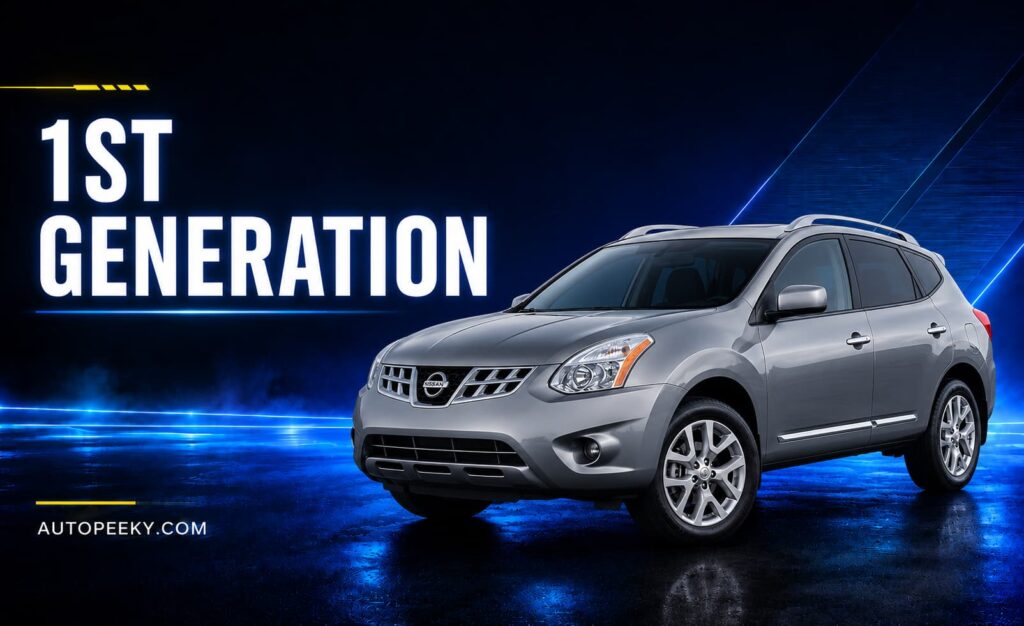
The original Rogue debuted in 2008 as Nissan’s answer to growing demand for car-based compact crossovers. It was a practical, stylish entry but the early years were immediately plagued by the CVT transmission problems that would follow this model for over a decade.
Worst Years: 2008, 2009, 2010 & 2013 – Nissan Rogue Years to Avoid
CVT transmission failure is the defining story of these four years. <cite index=”24-1″>The 2013 Rogue racked up more complaints than any other model year — the NHTSA categorizes most complaints as being related to the powertrain, specifically the CVT.</cite> The primary symptom: sudden, terrifying loss of acceleration the vehicle would shudder and jerk before stopping accelerating almost entirely, sometimes at highway speeds.
<cite index=”23-1″>The 2008 Nissan Rogue often suffered major transmission problems as early as 70,000 miles and struggled with electrical failures.</cite> This is an extremely early failure point for any transmission particularly on a vehicle purchased expecting reliable family transportation.
What’s puzzling about 2013 is that it was the final year of the first generation buyers reasonably expected Nissan to have resolved the issues by then. <cite index=”24-1″>It’s surprising that the 2013 Rogue racked up more complaints than any other first-gen model year one would assume Nissan had ironed out all the kinks, but it wasn’t to be.</cite>
Beyond the CVT, these years also accumulated recalls for:
- Malfunctioning Occupant Classification Systems affecting airbag deployment accuracy
- Electrical shorts from water intrusion into the wiring system
- Loose steering gear housing a structural safety concern
- Improperly tightened lug nuts on Rogue Select models wheel detachment risk
The 2009 and 2010 shared all of the 2008’s fundamental CVT weaknesses. Nissan issued software updates and fluid change recommendations during these years, but they didn’t fully resolve the failure pattern for affected vehicles.
AutoPeeky verdict: The 2008, 2009, 2010, and 2013 Nissan Rogue are the Nissan Rogue years to avoid from the first generation. The CVT failure rates, complaint volumes, and safety recall history make them risky used-car purchases regardless of price.
Best Years: 2011 & 2012 – Best 1st Gen Nissan Rogue
The 2011 and 2012 Rogues represent a meaningful though not complete improvement over the first generation’s troubled early years. NHTSA complaint volumes dropped, and both years showed lower rates of CVT-related failures than 2008–2010.
Under the hood: a 2.5L QR25DE four-cylinder paired with a CVT producing 170 horsepower and 175 lb-ft of torque. Fuel economy reached 22 city / 28 highway MPG competitive for the class at the time.
The SV trim added genuine value: rearview camera, premium audio, and keyless ignition came standard, making these well-equipped by their era’s standards. Some CVT complaints persisted in both years, but at significantly lower rates than the generation’s worst years.
If the budget demands a first-gen Rogue, the 2011 or 2012 is the only safe choice and only with a confirmed pre-purchase transmission inspection.
2nd Generation Nissan Rogue (2014–2020): Best & Worst Years
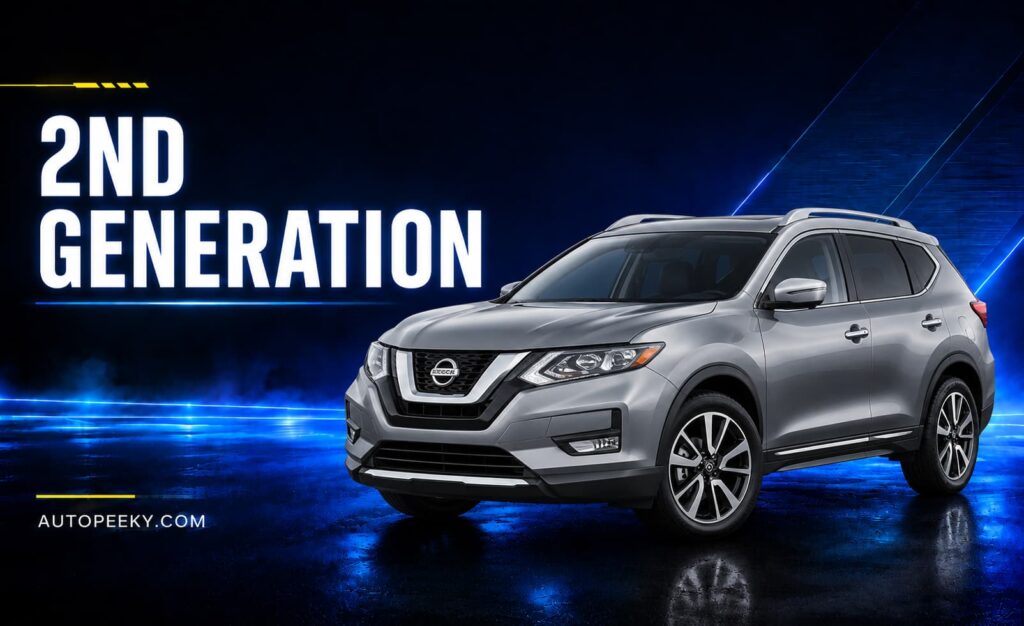
The second generation arrived for 2014 with a complete redesign, sharper styling, a bigger interior with an optional third row, and updated technology. Sales exploded, making the Rogue one of the best-selling vehicles in America. But the CVT problems didn’t disappear; they got worse in the early years before gradually improving.
Worst Years: 2014, 2015 & 2016 – Nissan Rogue Years to Avoid
These three years are the most problematic of the second generation and rank among the most complaint-heavy Rogue years across the model’s entire history.
<cite index=”26-1″>The 2014, 2015, and 2018 Nissan Rogues have the worst reliability records: CVT transmission failures cost $3,000–$5,000 and typically occur between 80,000 and 120,000 miles.</cite> For the 2014 and 2015 specifically, this failure window is well within the typical ownership timeline of a used-car buyer.
<cite index=”23-1″>For the second generation in 2015, buyers confronted persistent electrical glitches such as infotainment freezing or faulty safety sensors, plus ongoing CVT hesitation and jerking.</cite>
Additional documented issues across 2014–2016:
- Corroding under-dash electrical connectors triggered a major recall affecting cabin electronics
- Fuel pump failures from improperly plated components recall-level defect affecting drivability
- 2015 shifter defect could allow the vehicle to roll away from a “park” position, a serious safety hazard
- Water-induced electrical shorts damaged wiring and caused unpredictable electrical behavior
- Burning smell from electrical components a fire-adjacent concern in multiple owner reports
<cite index=”24-1″>One couple had to spend $6,619 replacing their CVT with the car at 87,734 miles, and expressed surprise that the car didn’t warn them of anything being wrong before the CVT completely failed.</cite> That is the nightmare scenario for any used-car buyer: a catastrophic, expensive repair with no warning signs.
The CVT class-action lawsuit filed against Nissan specifically cited 2014–2018 Rogue models as the most affected. Nissan settled, extending warranty coverage on many affected vehicles but warranty coverage doesn’t eliminate the underlying failure risk on high-mileage used examples.
Neutral Years: 2017 & 2018
The 2017 and 2018 Rogue sit in neutral territory better than 2014–2016, but not clean enough for an unreserved recommendation.
Nissan improved the CVT calibration for 2017, and complaint volumes dropped meaningfully. Technology upgrades were significant: the 2017 gained ProPILOT Assist semi-autonomous driving on higher trims, one of the most capable driver assistance systems in the class at the time. Infotainment connectivity also improved substantially.
However, <cite index=”25-1″>we recommend avoiding the 2018 model if you can manage it</cite> CVT complaints spiked again relative to 2017, and electrical system glitches continued to generate owner frustration. 2017 is the stronger of the two neutral years.
Both are acceptable used buys if priced well and if a thorough pre-purchase transmission inspection is completed but the 2019 and 2020 are meaningfully better choices at similar price points.
Best Years: 2019 & 2020 – Best 2nd Gen Nissan Rogue
By 2019, Nissan had sufficiently refined the CVT and addressed the most serious electrical concerns to make the Rogue a genuinely recommendable used compact SUV.
The 2.5L QR25DE four-cylinder returned, now paired with an improved CVT calibration delivering 26 city / 33 highway MPG, a notable fuel economy improvement over earlier second-gen years. Standard and available features reached their second-gen peak: ProPILOT Assist, Apple CarPlay, and Android Auto all became available, alongside blind-spot monitoring and rear cross-traffic alert.
NHTSA complaint volumes for both 2019 and 2020 were dramatically lower than 2014–2016. Owner satisfaction scores on Edmunds and KBB reflected the improvement these years, consistently earning above-average ratings in the compact SUV class.
The 2019 and 2020 Nissan Rogue are AutoPeeky’s recommended buys from the second generation particularly for buyers who want a larger interior or available third-row seating that the third generation dropped.
3rd Generation Nissan Rogue (2021–Present): Best & Worst Years
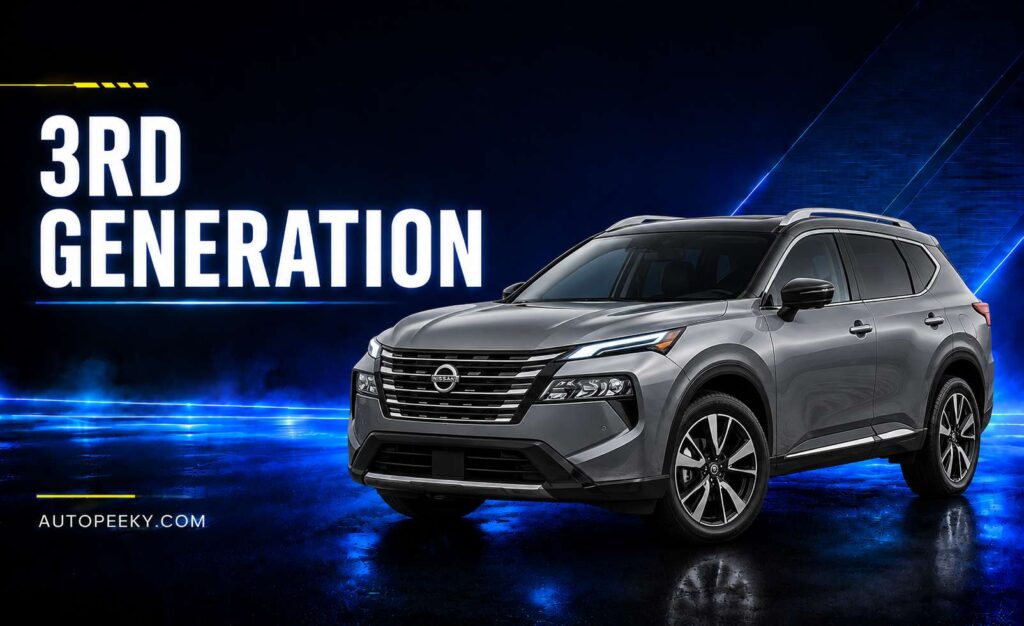
The 2021 Rogue arrived as a ground-up redesign on a revised platform, with the most significant engineering change in the model’s history: a new 1.5L turbocharged three-cylinder engine replacing the aging 2.5L four-cylinder, paired with a revised CVT with improved cooling and control logic.
The new powertrain addressed many of the CVT reliability concerns of the first and second generations. But the debut year, true to Rogue form, stumbled.
Worst Year: 2021 – Nissan Rogue Year to Avoid
<cite index=”23-1″>A newly redesigned engine plagued many drivers in the problematic 2021 Rogue due to metal shavings causing engine failure risks; repairs could reach $5,000 or more after an NHTSA probe raised concern about this critical issue.</cite>
This is a different kind of problem from the CVT woes of earlier years; it’s an engine manufacturing defect reminiscent of the Theta II crisis that affected Kia and Hyundai. Metal contamination in the new 1.5L turbo engine’s oil system caused accelerated internal wear and, in some cases, complete engine failure at disturbingly low mileage.
Additional 2021 issues included:
- Fuel pump failures a recall affecting the primary fuel delivery system
- Rearview display malfunctions camera image freezing or not displaying
- Brake caliper missing internal bushings a safety-critical manufacturing defect compromising stopping performance
- Fuel odor entering the cabin a fire-adjacent concern generating widespread owner reports
- Electrical system malfunctions broad category of infotainment and accessory failures
The 2021 Rogue’s debut-year problems are serious enough that AutoPeeky strongly recommends skipping it particularly given that the 2022 model represents a dramatically cleaner ownership proposition at similar used-market prices.
Best Years: 2022, 2023 & 2024 – Best Nissan Rogue Years Overall
These three years represent the Nissan Rogue at its best and they make a genuine case for the third-generation Rogue as one of the more compelling compact SUVs currently available.
<cite index=”26-1″>The third-generation Rogue earned above-average reliability ratings from J.D. Power and Consumer Reports consistently since the 2022 model year.</cite> Nissan addressed the 2021 engine manufacturing concerns, and the revised 1.5L turbocharged three-cylinder delivers strong real-world performance: 30 city / 37 highway MPG in FWD configuration class-leading fuel economy for a non-hybrid compact SUV. If hybrid efficiency is a priority, our guide to the best Toyota Venza years covers the Venza hybrid’s even stronger 40/37 MPG figures as an alternative worth considering.
Technology and safety are excellent across 2022–2024:
- 9-inch touchscreen standard across all trims
- ProPILOT Assist with Navi-link semi-autonomous highway driving
- Wireless Apple CarPlay available on higher trims
- Standard automatic emergency braking, blind-spot monitoring, rear cross-traffic alert, and lane departure warning across all 2022+ trim levels
- 181 horsepower from the turbocharged 1.5L more responsive than the old 2.5L felt in daily driving
AutoPeeky.com top pick: the 2023 Nissan Rogue it offers the fully resolved third-generation platform, the best technology package of the generation, above-average Consumer Reports reliability scores, and is now appearing in the used and CPO market at accessible prices. Buyers cross-shopping a compact sedan rather than an SUV should also check out our guide to the best & worst Kia Forte years the 2022 Forte offers similar reliability and technology at a lower price point.
The CVT Problem: What Every Nissan Rogue Buyer Must Know
The Nissan Rogue’s CVT (Continuously Variable Transmission) is the single most important reliability factor in the model’s history. Here’s what you need to know before buying any used Rogue:
What went wrong: Nissan’s Xtronic CVT used across the 2008–2020 Rogue lineup was engineered for fuel efficiency but proved vulnerable to overheating under sustained load. The transmission fluid degraded faster than expected, and the internal components suffered accelerated wear. The result: stuttering, shuddering acceleration followed by complete transmission failure, often between 80,000–120,000 miles.
The lawsuit: Nissan faced a class-action lawsuit specifically citing the CVT’s failure pattern in 2014–2018 Rogue models. The settlement extended warranty coverage on many affected vehicles, but that warranty protection doesn’t apply to the high-mileage used examples most buyers are actually shopping for.
CVT repair cost: $3,000–$5,000+ at a dealership. Many independent shops won’t touch Nissan CVT rebuilds, limiting your repair options.
What Nissan fixed: The 2021 redesign replaced the aging CVT-plus-2.5L combination with a turbocharged 1.5L engine and a genuinely revised CVT with improved cooling capacity and updated control software. Early 2021 manufacturing issues aside, the 2022+ CVT has shown far fewer failures in real-world ownership.
Before buying any 2008–2020 Rogue: Have a mechanic perform a transmission-specific inspection. Listen for shuddering under light acceleration, check for CVT-related service records, and verify the transmission fluid has been changed at proper intervals. Factor potential CVT replacement cost into your offer.
Nissan Rogue Year-by-Year Summary
| Year | Rating | Key Notes |
| 2008 | ❌ Avoid | CVT failures from 70K miles, electrical recalls |
| 2009 | ❌ Avoid | Same CVT issues, water intrusion electrical faults |
| 2010 | ❌ Avoid | Steering recall, continued CVT complaints |
| 2011 | ✅ Best | Lower complaint volume, best 1st-gen option |
| 2012 | ✅ Best | Solid 1st-gen year — inspect CVT before buying |
| 2013 | ❌ Avoid | Highest complaint count of any Rogue model year |
| 2014 | ❌ Avoid | CVT failures $3K–$5K, electrical recall, fuel pump |
| 2015 | ❌ Avoid | Shifter rollaway recall, CVT failure, high NHTSA volume |
| 2016 | ❌ Avoid | Continued CVT and electrical issues, burning smell reports |
| 2017 | ⚠️ Neutral | Improved — ProPILOT Assist added, CVT better |
| 2018 | ⚠️ Neutral | CVT spike vs 2017 — acceptable with inspection |
| 2019 | ✅ Best | Sorted CVT, CarPlay/Android Auto, ProPILOT |
| 2020 | ✅ Best | Best 2nd gen year — low complaints, strong features |
| 2021 | ❌ Avoid | Metal shavings engine defect, fuel pump recall, brake issue |
| 2022 | ✅ Best | Resolved 3rd gen — 30/37 MPG, strong reliability |
| 2023 | ✅ Best | AutoPeeky top pick — best all-round Rogue ever |
| 2024 | ✅ Best | Updated tech, 5-star NHTSA safety rating trajectory |
Is the Nissan Rogue a Good Car?
In the right years, yes, the Nissan Rogue is a very good car. Here’s AutoPeeky’s honest assessment:
Where the 2022–2024 Rogue excels:
- Class-leading fuel economy (30/37 MPG) without a hybrid powertrain
- ProPILOT Assist is among the most capable semi-autonomous systems in the class
- Spacious, comfortable interior with genuinely premium material quality on higher trims
- Strong standard safety suite across all trims
- Annual maintenance cost approximately $467/year (RepairPal) close to class average
Where it falls short vs. competition:
- The 1.5L three-cylinder engine feels underwhelming under heavy load or in hot weather — some owners report thermal management concerns on long trips
- Resale value trails Toyota RAV4 and Honda CR-V meaningfully
- Pre-2021 CVT reputation still affects used buyer confidence
Versus the competition: For shoppers comparing the 2022–2024 Rogue against the RAV4 or CR-V, the Rogue wins on fuel economy and technology value. The RAV4 wins on long-term reliability reputation and resale. The CR-V offers a better driving experience. All three are legitimate class contenders in their current generations the Rogue is no longer the reliability outlier it was between 2013 and 2018.
If you’re also researching similar-era compact crossovers, our guide to the best & worst Jeep Compass years covers another popular model with a similarly turbulent early history that resolved in later production years.
Common Nissan Rogue Problems: What to Check Before You Buy
Regardless of which year you’re considering, AutoPeeky flagged these recurring inspection items across the Rogue’s full production history:
CVT transmission behavior (all pre-2021 models): Test drive at highway speeds. Listen for shuddering, vibration, or hesitation under light acceleration. These are the early warning signs of CVT wear. Request any transmission service records.
Electrical system stability (2014–2018): Test every electronic system on the test drive infotainment screen responsiveness, all driver assistance alerts, climate control, and backup camera. Intermittent failures are hard to catch but worth probing.
Engine for metal contamination (2021 only): Request a full oil analysis or have a mechanic check for any knocking or debris indicators in the oil system. Confirm the engine recall was addressed via VIN check at NHTSA.gov.
Recall completion (all years): Verify the specific VIN at NHTSA.gov before any purchase. The Rogue has accumulated recalls across all three generations.
Fuel system integrity (2021): Any fuel odor in the cabin is a red flag. Do not dismiss it as a minor issue.
Conclusion
The best & worst Nissan Rogue years tell a clear story of a model that took over a decade to fully resolve its core reliability weakness and ultimately did so with the 2022 third generation.
Buy the 2023 or 2022 Rogue for the best overall experience: class-leading fuel economy, proper active safety technology, and a resolved powertrain without the CVT baggage of earlier years. The 2024 is equally excellent for buyers who want the newest available. If you’re also considering compact luxury alternatives in a similar budget range, our guide to the best & worst Buick Encore years is worth a look. The 2020–2021 Encore similarly benefited from late-production refinements.
The 2019 and 2020 are the safest second-generation options if budget pushes you to an older model, and the 2011 or 2012 are the only first-gen years worth considering.
Avoid the 2008–2010, 2013–2016, and 2021 model years. The CVT failure alone costs $3,000–$5,000+ making these years financially risky, and the 2021’s engine manufacturing defect adds another layer of concern.
As with any used car purchase, verify the full VIN history at NHTSA.gov, confirm all recalls are closed, get an independent pre-purchase inspection with specific focus on the transmission, and factor potential CVT repair costs into your offer on any pre-2021 model.
Have a question about a specific Rogue year, trim, or the Rogue Sport? Drop it in the comments the AutoPeeky team reads every one.
FAQ’s
What Nissan Rogue years should I avoid?
The Nissan Rogue years to avoid are 2008, 2009, 2010, 2013, 2014, 2015, 2016, and 2021. The most problematic years are 2013–2016 in the second generation, where CVT transmission failures cost $3,000–$5,000 and occurred between 80,000–120,000 miles. The 2021 third-generation debut had a separate engine manufacturing defect involving metal shavings contaminating the oil system.
What is the best year for a Nissan Rogue?
The best Nissan Rogue year is the 2023 it delivers a fully resolved third-generation platform, class-leading 30/37 MPG fuel economy, ProPILOT Assist semi-autonomous driving, and above-average Consumer Reports reliability scores. 2022 and 2024 are equally strong alternatives. For second-gen shoppers, the 2019 or 2020 are the recommended buys.
Does the Nissan Rogue have transmission problems?
Yes CVT transmission problems are the defining reliability issue in the Nissan Rogue’s history, particularly in 2008–2016 models. Symptoms include shuddering, jerking, loss of acceleration, and eventual transmission failure between 80,000–120,000 miles. Nissan faced a class-action lawsuit over this issue. The 2022+ third-generation Rogue has shown significantly fewer transmission problems thanks to a revised powertrain.
Is the 2021 Nissan Rogue a good buy?
No, the 2021 Nissan Rogue is not recommended as a used purchase. It was the debut year of the third generation and suffered from an engine manufacturing defect where metal shavings contaminated the oil system, causing engine failure risks with repair costs of $5,000 or more. A fuel pump recall and brake caliper defect added further concerns. 2022 is a significantly better choice.
What are Nissan Rogue Sport years to avoid?
The Nissan Rogue Sport is a separate, smaller model based on the Nissan Qashqai platform. While it shares the Rogue name, it has a different reliability history. The 2017 and 2018 debut years had higher complaint volumes particularly around CVT behavior and electrical systems. The 2020 and newer Rogue Sport models are generally considered more reliable. Always check the specific VIN at NHTSA.gov before purchasing any used Rogue Sport.
How long does a Nissan Rogue last?
A well-maintained Nissan Rogue from a reliable model year (2019–2020 or 2022+) can realistically reach 150,000–200,000 miles. The biggest longevity risk is the CVT transmission in pre-2021 models neglecting transmission fluid changes dramatically shortens its lifespan. For 2022+ models with the revised CVT and turbocharged engine, long-term durability data is building positively.
Is the Nissan Rogue reliable compared to Toyota RAV4 and Honda CR-V?
In the 2022–2024 generation, the Rogue is a competitive choice but still trails the RAV4 and CR-V on long-term reliability reputation and resale value. The Rogue wins on fuel economy (30/37 MPG vs. 27/35 for RAV4 and 28/34 for CR-V) and technology value per dollar. Pre-2021 Rogues significantly underperform both competitors in reliability data.
What should I check before buying a used Nissan Rogue?
Before buying any used Nissan Rogue: (1) verify the full VIN recall history at NHTSA.gov; (2) test drive at highway speed listening for CVT shuddering or hesitation; (3) request all transmission service records and confirm fluid changes were performed; (4) for 2021 models, confirm the engine recall was addressed and check for any oil contamination signs; (5) factor $3,000–$5,000 potential CVT replacement into your offer on any 2008–2020 model; (6) have an independent mechanic perform a pre-purchase inspection focused on the transmission and electrical systems.