
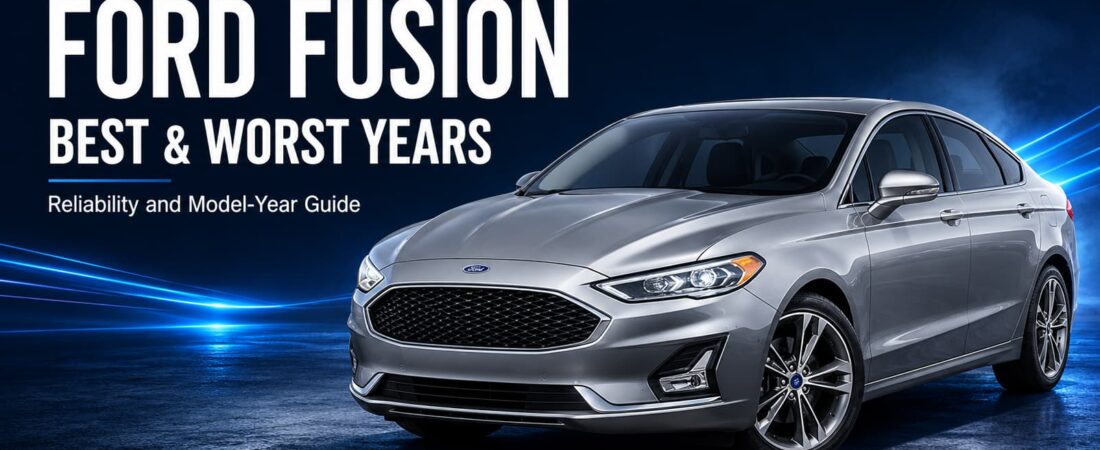
For 15 years, the Ford Fusion was one of the most popular midsize sedans in America. It competed directly with the Toyota Camry, Honda Accord, and Nissan Altima, and for much of its run, it held its own. Attractive styling, multiple powertrain options including a hybrid, available all-wheel drive, and competitive pricing made the Fusion a strong pick for commuters and families alike.
Since its release, the NHTSA has received over 5,000 complaints for the Ford Fusion. This guide uses that complaint data alongside recall records, Consumer Reports reliability scores, RepairPal data, and owner feedback from Edmunds, J.D. Power, and Car Complaints to rank every Best & Worst Ford Fusion Years and help you buy the right one.
Ford Fusion Best and Worst Years
Here’s the condensed version.
Best Ford Fusion years: 2008, 2009, 2012, 2017, 2018, 2019, 2020
Worst Ford Fusion years to avoid: 2010, 2011, 2013, 2014
Neutral years (decent with caveats): 2006, 2007, 2015, 2016
The pattern is unmistakable. The facelifted first-generation models (2010–2012) introduced the Electronic Power Assist Steering system that became Ford’s biggest liability. And the first two years of the second generation (2013–2014) carried multiple serious defects including engine fire risk. The Fusion got reliably good from 2017 onward.
Ford Fusion Generations at a Glance
The Fusion spanned two generations with meaningfully different platforms, engines, and problems.
| Generation | Years | Platform | Available Engines | Transmission |
| 1st Gen | 2006–2012 | Ford CD3 | 2.3L/2.5L I4, 3.0L V6, 2.5L Hybrid | 5/6-speed auto, CVT (hybrid) |
| 2nd Gen | 2013–2020 | Ford CD4 | 2.5L I4, 1.5L/1.6L/2.0L EcoBoost turbo, 2.0L Hybrid, Energi PHEV | 6-speed auto, CVT (hybrid) |
The first generation shared its platform with the Mazda6 and Mercury Milan. The second generation moved to Ford’s own CD4 platform, grew slightly larger, gained a turbocharged EcoBoost lineup, and offered the Fusion Energi plug-in hybrid starting in 2013.
Engine choice matters enormously for reliability. The naturally aspirated 2.5L I4 and the hybrid powertrain have the strongest long-term reliability records. The 1.6L EcoBoost carries a documented fire risk in early second-gen models. The 2.0L EcoBoost is generally solid but occasionally develops coolant leak issues. We’ll cover engine-specific reliability in detail below.
Best and Worst Years for 1st Generation Ford Fusion (2006–2012)
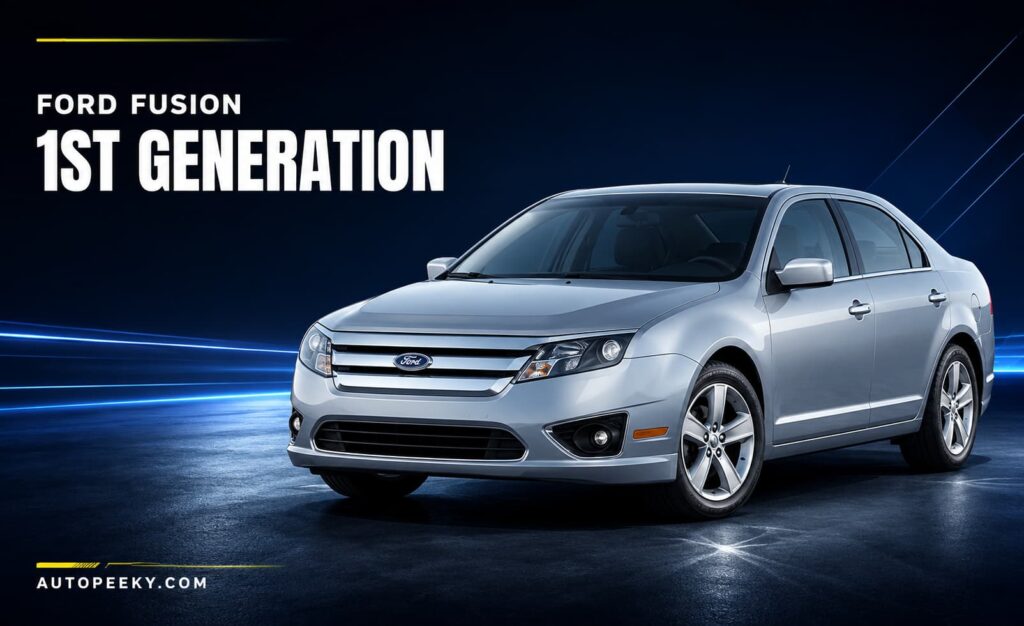
The first-generation Fusion had a seven-year run and went through one major facelift in 2010 that changed its reliability trajectory dramatically for the worse.
Best Years: 2008, 2009, 2012
The 2008 Ford Fusion is one of the most reliable years in the entire Fusion lineup. It came with a 2.3L Duratec I4 producing 160 hp or a 3.0L Duratec V6 producing 221 hp, both paired with a six-speed automatic. NHTSA complaint volume was low, and the car didn’t carry the power steering defect that would define later models. Owner satisfaction on Edmunds and J.D. Power was strong.
The 2009 model built on that foundation by adding an AWD V6 Sport model and the first Fusion Hybrid. Ford SYNC infotainment arrived as well. Complaint volumes remained low, and the 2009 avoided the EPAS issues that started in 2010. The hybrid model in particular drew positive reviews for its fuel economy and smooth operation.
The 2012 model sits in a complicated spot. It still uses the EPAS system that plagued the 2010 and 2011, and CarComplaints documented over 1,395 steering complaints for this year. However, overall complaint severity was lower than 2010–2011, and some data sources (including FIXD) rate it as the most reliable first-gen year based on broader metrics including owner satisfaction and maintenance costs. If you buy a 2012, verify that any power steering recalls have been completed and test the EPAS system thoroughly during your test drive.
Worst Years: 2010, 2011
These are the Ford Fusion years to avoid, full stop. The problems are serious, well-documented, and expensive.
The 2010 Ford Fusion is the worst year in the entire Fusion lineup. It accumulated 7,009 NHTSA complaints an extraordinarily high number for any vehicle. The top three complaint categories were steering defects (1,637 complaints at an average of 104,520 miles), transmission/drivetrain issues (809 complaints at 64,270 miles), and unintended acceleration (789 complaints at 59,473 miles).
The core problem was the Electronic Power Assist Steering (EPAS) system. It would fail suddenly while driving, causing the steering wheel to seize or become extremely difficult to turn. NHTSA opened two separate investigations into the 2010 Fusion’s power steering, covering approximately 938,000 vehicles including the Fusion, Fusion Hybrid, Lincoln MKZ, and Mercury Milan. Multiple owners reported crashes resulting from the sudden loss of steering assist.
Beyond the steering, the 2010 also suffered from throttle body failures that caused stalling and rough idle, and transmission problems including harsh shifting and complete failure.
The 2011 Ford Fusion inherited every problem from the 2010. The EPAS system continued to fail at similar rates, and Ford’s recalls for the 2011–2013 models notably excluded the 2010, leaving those owners without coverage for the same defect. Throttle body issues and transmission complaints persisted.
Neutral Years: 2006, 2007
The 2006 and 2007 models were the Fusion’s debut years. They didn’t have the EPAS steering defect (which arrived with the 2010 facelift), but they carried typical first-generation growing pains: interior component failures (door handles, window regulators), minor electrical glitches, and brake wear complaints. They’re not dangerous like the 2010–2011, but they’re also 18–20 years old at this point with limited remaining useful life for most buyers.
Best and Worst Years for 2nd Generation Ford Fusion (2013–2020)
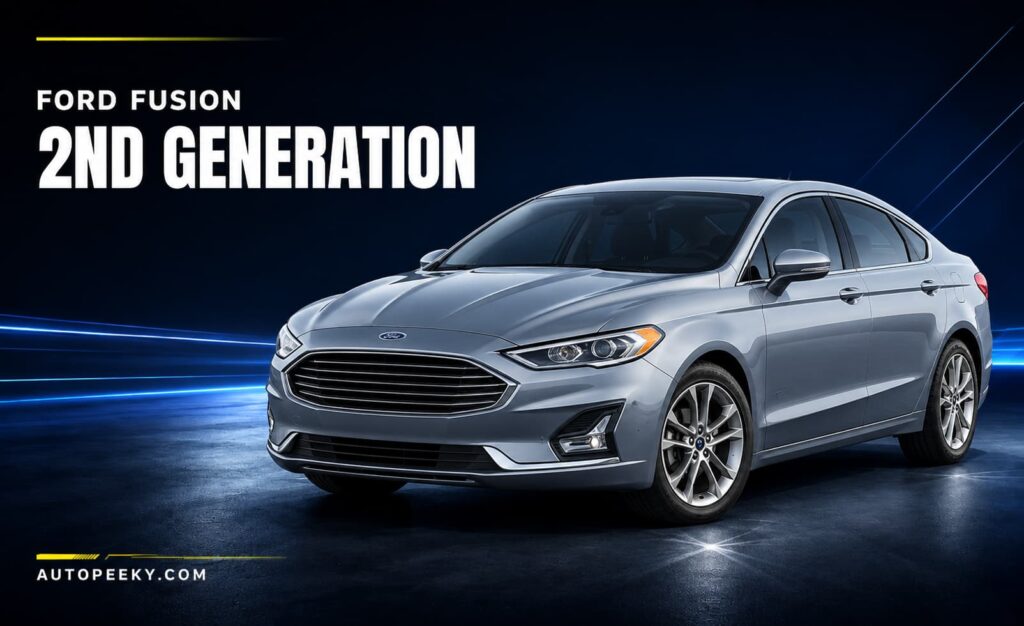
The second generation was a dramatic redesign. The Fusion gained an Aston Martin-inspired front end, a wider range of turbocharged engines, and the Fusion Energi plug-in hybrid. Reliability was rocky at first but improved substantially by 2017.
Best Years: 2017, 2018, 2019, 2020
These four years represent the Ford Fusion at its peak. If you’re shopping for a used Fusion, this is where you should focus.
The 2017 model received a significant refresh that addressed the transmission and engine concerns of earlier second-gen years. Active safety features were expanded, interior quality improved, and NHTSA complaint volumes dropped sharply. Some 2017 models had minor electrical issues (a typical first-refresh concern), but nothing approaching the severity of 2013–2014 problems.
The 2018 and 2019 models continued refining the formula. The 2019 added lane-keeping assist and automatic emergency braking as available features. CarGurus identifies the 2019 and 2020 as the best Fusion years to buy, citing low complaint volumes, strong safety ratings, and competitive used pricing.
The 2020 Ford Fusion, the final model year, may be the most reliable Fusion ever produced. FIXD gives it a perfect 10/10 reliability score with a 9/10 owner reliability rating. It has only one recall on record and minimal owner complaints. 20% of 2020 Fusion owners surveyed by FIXD believe their car will exceed 200,000 miles. Used 2019–2020 models with under 50,000 miles can still be found for under $16,000, making them strong value propositions in the midsize sedan market.
Worst Years: 2013, 2014
The first two years of the second generation are Ford Fusion years to avoid. Multiple serious defects affected these models simultaneously.
The 2013 Ford Fusion carried approximately 19 recalls, one of the highest recall counts for any single model year from any manufacturer. The most dangerous issue was an engine oil leak on vehicles equipped with the 1.6L EcoBoost engine. Oil would leak onto hot engine components, creating a fire hazard. Ford issued a recall, but the scope of the problem was significant.
Power steering failures continued from the first generation into the 2013, with NHTSA receiving extensive complaints about sudden loss of steering assist. Transmission problems also emerged, particularly a “shuddering” sensation during acceleration in vehicles with the six-speed automatic. Fuel system issues rounded out a troubled debut year.
The 2014 model carried forward most of the 2013’s problems. The 1.6L EcoBoost fire risk persisted, transmission shudder was still present, and electrical gremlins added to the complaint volume. While slightly improved over 2013, it still falls firmly in the “avoid” category.
Neutral Years: 2015, 2016
The 2015 and 2016 models represent a transition. Ford had addressed the most critical recalls from 2013–2014, and complaint volumes decreased noticeably. However, isolated power steering and transmission issues still surfaced. CarGurus recommends sticking to 2016 or newer for hybrid and Energi models, as mechanical updates that year improved transmission reliability for electrified powertrains.
These years are acceptable if the price is right and service records are clean, but the 2017–2020 range is meaningfully safer for only a modest price premium.
Ford Fusion Hybrid Years to Avoid (and Buy)
This is a section no competitor covers properly, but it matters because the Fusion Hybrid is one of the most popular used hybrid sedans on the market.
The Ford Fusion Hybrid was produced from 2010 to 2020. It used a 2.0L Atkinson-cycle I4 paired with an electric motor and a CVT. The Fusion Energi plug-in hybrid arrived in 2013 with a larger battery pack.
Hybrid years to avoid: The 2010 Fusion Hybrid shares the same EPAS power steering defect as the regular 2010 Fusion, with 145 steering-specific complaints on NHTSA. Engine stalling was also reported. The 2013 and 2014 Fusion Energi models had first-year growing pains including electrical issues and early transmission concerns.
Best hybrid years: The 2016–2020 Fusion Hybrid and Energi models are the most reliable. Mechanical updates in 2016 improved the CVT’s behavior, and by 2018–2020, the hybrid powertrain was thoroughly proven. The hybrid battery typically lasts 120,000–150,000 miles, and Ford’s hybrid component warranty covers eight years or 100,000 miles from the factory.
If you specifically want a Fusion Hybrid, target the 2018–2020 range. They’re fuel-efficient (42 mpg combined for the hybrid), reliable, and priced attractively on the used market.
Most Common Ford Fusion Problems Across All Years
Here are the recurring defects that define the Fusion’s reliability landscape. Knowing these helps you inspect any model year more effectively.
Power Steering Failure (EPAS)
The single biggest Ford Fusion problem. The Electronic Power Assist Steering system would fail suddenly while driving, causing the steering wheel to lock up or become extremely heavy. This affected the 2010–2013 models most severely. NHTSA conducted multiple investigations covering nearly a million vehicles. The 2010 alone had 1,637 steering complaints. Repair costs for the power steering rack assembly averaged $800–$1,500. This defect was dangerous; multiple crashes were attributed to sudden steering loss.
1.6L EcoBoost Engine Oil Leak and Fire Risk
Specific to the 2013 and 2014 models equipped with the 1.6L EcoBoost engine. Oil leaked onto hot exhaust components, creating a fire hazard. Ford issued a recall, but not before significant complaints accumulated. If you’re looking at a 2013–2014 Fusion, verify whether it has the 1.6L EcoBoost and confirm the recall was completed. Better yet, choose a model with the 2.5L I4 or the hybrid powertrain.
Transmission Shudder and Failure
The six-speed automatic in early second-gen models (2013–2014) developed a shuddering sensation during acceleration, often described as a vibration between 40–60 mph. In some cases, the transmission failed entirely. The issue improved significantly by 2015 and was largely resolved by 2017. The CVT in hybrid models was generally more reliable than the conventional automatic.
Throttle Body Failures
Primarily a first-gen problem affecting 2010–2012 models. The throttle body would malfunction, causing rough idle, stalling, and hesitation during acceleration. Replacement costs averaged $400–$600.
Electrical and Interior Issues
Scattered across both generations but especially in early years. The 2006–2007 models had interior component failures (door handles, switches). The 2013–2014 models had SYNC infotainment glitches. The 2017 had some electrical gremlins. None of these are as dangerous as the steering or engine defects, but they add to repair costs.
Which Ford Fusion Engine Is Most Reliable?
Engine choice has a bigger impact on Fusion reliability than almost any other factor. Here’s how each option stacks up.
2.5L Duratec/iVCT I4 (naturally aspirated): This is the most reliable Fusion engine across both generations. No turbocharger to fail, no documented fire risk, and proven durability past 200,000 miles with standard maintenance. If you don’t need extra power, this is the engine to buy.
2.0L EcoBoost turbo I4: More power (240 hp) and available AWD, but slightly higher maintenance requirements. Coolant leak issues appeared in some years. Generally reliable from 2015 onward.
1.6L EcoBoost turbo I4: Avoid this engine entirely unless recall work has been verified. The oil leak and fire risk in 2013–2014 models make this the riskiest Fusion powertrain.
1.5L EcoBoost turbo I4 (replaced the 1.6L from 2015): Improved over the 1.6L with better reliability. No documented fire risk. A reasonable choice from 2015 onward.
2.0L Atkinson-cycle Hybrid: Excellent long-term reliability. The hybrid battery lasts 120,000–150,000 miles, and the CVT is more durable than the conventional automatic. Best in 2016–2020 models.
3.0L Duratec V6 (1st gen only): Solid and proven but less fuel-efficient. Good option if you find a 2008–2009 with the V6.
How Long Does a Ford Fusion Last?
With proper maintenance, a Ford Fusion typically lasts between 200,000 and 250,000 miles. At the national average of 15,000 miles per year, that translates to roughly 13–17 years of reliable service. Some owners report reaching 280,000–300,000 miles with only minor repairs.
RepairPal gives the Fusion a 4.0 out of 5.0 reliability rating with annual maintenance costs averaging approximately $440 below the midsize sedan average. The 2.5L I4 and hybrid powertrains are the most likely to reach the 250,000-mile threshold without a major engine or transmission overhaul.
Model year matters significantly. A 2019 Fusion with 60,000 miles is a fundamentally different proposition than a 2010 with the same mileage. Always weight model-year reliability data when estimating remaining lifespan.
What to Check Before Buying a Used Ford Fusion
Inspection priorities vary by generation and engine.
For 1st generation models (2006–2012):
- Test the power steering system on 2010–2012 models. Drive at varying speeds and make several sharp turns. Any stiffness, warning lights, or hesitation is a deal-breaker.
- Check for throttle body issues on 2010–2012 models: rough idle, stalling at stops, hesitation on acceleration.
- On V6 models, check the transmission for harsh shifts between gears.
- Verify recall completion status through Ford’s recall lookup tool.
For 2nd generation models (2013–2020):
- On 2013–2014 models, confirm which engine is installed. If it’s the 1.6L EcoBoost, verify the oil leak recall was completed.
- Test for transmission shudder on 2013–2015 models by accelerating through 40–60 mph in normal driving conditions. Any vibration or hesitation suggests the transmission issue.
- On 2013–2014 models, test the power steering thoroughly — the EPAS defect carried over from the first generation.
- On 2017+ models, test all electrical systems including the SYNC infotainment.
- For hybrid models, check the hybrid battery health indicator on the dashboard (if available) and ask for service records on the high-voltage battery.
The same generation-specific approach to inspection applies when shopping for any used vehicle. Our Best & Worst Jeep Compass Years guide walks through similar red flags for compact SUV buyers.
Ford Fusion vs. Alternatives on the Used Market
The Fusion is discontinued, but the used midsize sedan market is packed with options. Here’s how it compares.
Toyota Camry: The reliability benchmark. The Camry has fewer problem years and a longer average lifespan than the Fusion. But it’s also more expensive on the used market and not as fun to drive. If reliability is your only priority, the Camry wins.
Honda Accord: Similar to the Camry in reliability but with a more engaging driving experience. Used Accords hold their value well, so expect to pay more than for a comparable Fusion.
Hyundai Sonata: Competitive pricing with the Fusion and improving reliability in recent years. Some Sonata years have their own engine issues (the Theta II recall), so research is essential.
Nissan Altima: Generally cheaper than the Fusion, but CVT reliability on certain Altima years is a real concern. The Fusion’s conventional automatic (in non-hybrid models) is more durable than the Altima’s CVT.
Mazda6: Shares the CD3 platform with the first-gen Fusion but has a slightly better reliability reputation. Worth considering if you prioritize driving dynamics.
The Fusion’s biggest advantage on the used market is pricing. Because it’s discontinued and Ford has pivoted to trucks and SUVs, used Fusion values have depreciated more aggressively than Camrys and Accords. A 2019–2020 Fusion in good condition can be found for $14,000–$18,000, which is difficult to beat for the feature set and reliability level.
Ford Fusion Average Resale Values by Year Range
| Model Year Range | Average Used Price Range | Notes |
| 2006–2009 | $2,500 – $6,000 | 2008–2009 are safest picks; aging fast |
| 2010–2012 | $3,000 – $7,000 | EPAS risk; avoid 2010–2011 |
| 2013–2014 | $5,000 – $10,000 | High recall count; engine fire risk on 1.6L |
| 2015–2016 | $7,000 – $12,000 | Transition years; improving but not peak |
| 2017–2018 | $10,000 – $16,000 | Strong reliability; good value |
| 2019–2020 | $13,000 – $20,000 | Best overall value; low complaints |
The sweet spot is 2018–2020. You get peak Fusion reliability, modern safety features, low depreciation resistance (working in your favor as a buyer), and a wide selection on the used market.
Is the Ford Fusion Discontinued?
Yes. Ford discontinued the Fusion after the 2020 model year. The decision was part of Ford’s broader strategic shift away from sedans and toward SUVs, trucks, and electric vehicles. Declining sedan sales industry-wide made the Fusion increasingly difficult to justify alongside the Escape, Explorer, and F-150.
Ford has no direct sedan replacement for the Fusion. The closest current alternatives in Ford’s lineup are the Escape (compact SUV) and the Maverick (compact truck), neither of which replicates the Fusion’s sedan driving experience.
For used buyers, the discontinuation works in your favor. Fusion depreciation has been steeper than competitors like the Camry and Accord, which means better deals. Parts availability remains strong because millions of Fusions are still on the road, and major components are shared with other Ford vehicles.
Conclusion
For the safest, most reliable Fusion, buy a 2019 or 2020 model with the 2.5L I4 or hybrid powertrain. These offer peak reliability, modern safety tech, and strong used-market value. Expect to pay $13,000–$18,000 for a clean example with reasonable mileage.
On a tighter budget, the 2017 or 2018 models offer nearly the same reliability at a lower price point. The refreshed second-gen design, improved safety features, and resolved transmission issues make these strong picks.
For budget buyers, a 2008 or 2009 first-gen Fusion with the 2.5L I4 or V6 can still serve well as basic transportation, though age-related wear is a factor at this point.
Avoid the 2010, 2011, 2013, and 2014 models regardless of price. The power steering defect, engine fire risk, and transmission problems make these false economies even at steep discounts.
The Ford Fusion is a genuinely good midsize sedan in the right model year. Pick correctly, and you’ll get a comfortable, efficient daily driver that can easily reach 200,000 miles.
Looking for more model-year breakdowns? Browse our full library of best and worst year guides for data-backed buying advice. Our Best & Worst Toyota Avalon Years and Toyota Venza Best and Worst Years guides are also worth reading if you’re cross-shopping sedans and crossovers.
FAQ’s
What Ford Fusion years should you avoid?
The Ford Fusion years to avoid are 2010, 2011, 2013, and 2014. 2010 is the worst year overall with over 7,000 NHTSA complaints, primarily for power steering failure that could cause the steering wheel to seize while driving. The 2013 had approximately 19 recalls, including a fire risk from 1.6L EcoBoost engine oil leaks. The 2011 and 2014 inherit the problems of their respective worst-year siblings.
What is the most reliable Ford Fusion year?
The 2020 Ford Fusion is the most reliable model year based on NHTSA data, FIXD reliability scores (10/10), and owner feedback. It has only one recall and near-zero owner complaints. 2019 is equally strong. Among first-generation models, the 2008 and 2009 are the most reliable.
What Ford Fusion hybrid years should you avoid?
Avoid the 2010 Fusion Hybrid (same EPAS power steering defect as the gas model) and the 2013–2014 Fusion Energi (first-year electrical and transmission concerns). The 2016–2020 Fusion Hybrid and Energi models are the most reliable, with the CVT and hybrid battery proving durable across that range.
How long does a Ford Fusion last?
A Ford Fusion typically lasts 200,000–250,000 miles with regular maintenance. The 2.5L naturally aspirated I4 and hybrid powertrains have the best long-term durability. Annual maintenance costs average approximately $440 according to RepairPal, which is below the midsize sedan average. Some owners report exceeding 280,000 miles.
Does the Ford Fusion have transmission problems?
Some Ford Fusion years do have transmission problems. The 2013 and 2014 models are most affected, with owners reporting a “shuddering” vibration between 40–60 mph and, in severe cases, complete transmission failure. The issue improved by 2015 and was largely resolved by 2017. The CVT in hybrid models has a better reliability record than the conventional six-speed automatic.
Is the Ford Fusion 1.6 EcoBoost reliable?
No. The 1.6L EcoBoost engine in 2013–2014 Ford Fusion models carries a documented fire risk from oil leaking onto hot engine components. Ford issued a recall to address this. If you’re buying a Fusion, choose the 2.5L I4, the 2.0L EcoBoost (2015+), or the hybrid powertrain instead. The 1.5L EcoBoost that replaced the 1.6L from 2015 onward does not have the same fire risk.