
The Kia Optima spent two decades as one of the most competitive midsize sedans in America, stylish, well-equipped, and aggressively priced against the Honda Accord, Toyota Camry, and Nissan Altima. The best & worst Kia Optima years are separated by one of the most significant reliability gaps in the midsize sedan segment a gap caused primarily by the notorious Theta II engine, which powered third-generation Optimas from 2011 through 2015 and turned what should have been the model’s finest era into its most troubled.
The team at AutoPeeky has analyzed every Kia Optima model year from 2001 to 2020 cross-referencing NHTSA complaint databases, Consumer Reports reliability scores, J.D. Power owner satisfaction data, class-action recall histories, and thousands of real owner accounts to give you one clear, no-spin answer to the most important question any used Optima buyer can ask:
Which Kia Optima years should you target and which years should you avoid at all costs?
Kia Optima Generations
The Kia Optima ran through four distinct generations before being replaced by the Kia K5 for the 2021 model year. Understanding which generation you’re shopping for is the critical first step.
| Generation | Years | Key Notes |
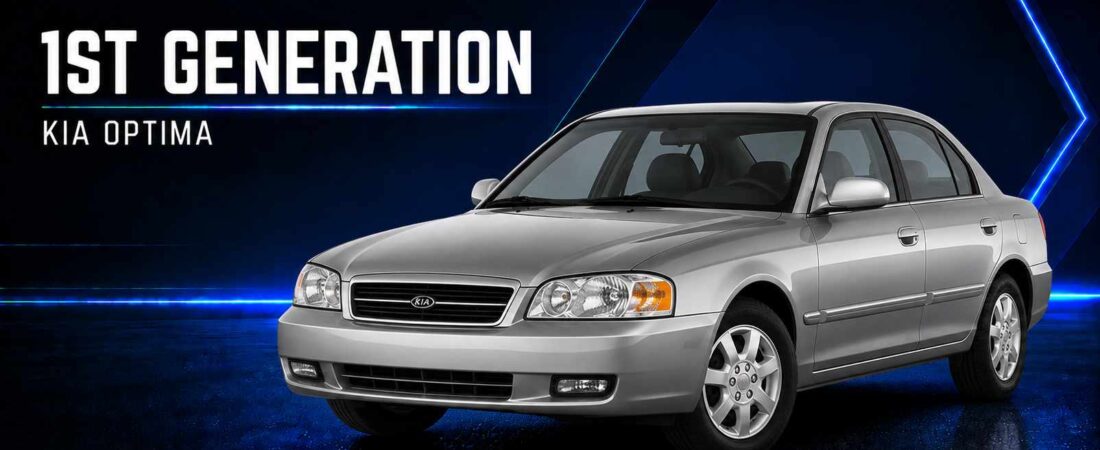
| 1st Generation (MS) | 2001–2006 | Debut era, mechanical growing pains |
| 2nd Generation (MG) | 2007–2010 | Wider, more spacious, engine fires in early years |
| 3rd Generation (TF) | 2011–2015 | Theta II engine crisis — most problematic era |
| 4th Generation (JF) | 2016–2020 | Redesigned, mostly sorted, best overall years |
Important note: The Kia Optima was discontinued after 2020 and replaced with the Kia K5 from 2021 onward. If you’re looking at a “new” Optima, you’re looking at used stock only.
Best & Worst Kia Optima Years
Here is AutoPeeky’s complete year-by-year ranking across all four generations:
| Generation | ✅ Best Years | ⚠️ Neutral Years | ❌ Worst Years |
| 1st Gen (2001–2006) | 2005, 2006 | 2003, 2004 | 2001, 2002 |
| 2nd Gen (2007–2010) | 2009, 2010 | — | 2007, 2008 |
| 3rd Gen (2011–2015) | 2015 | — | 2011, 2012, 2013, 2014 |
| 4th Gen (2016–2020) | 2017, 2018, 2019, 2020 | — | 2016 |
The fast answer: The Kia Optima years to avoid are 2001, 2002, 2007, 2008, 2011, 2012, 2013, 2014, and 2016. The best years to buy are 2017–2020 for the most reliable ownership experience, or 2009–2010 and 2005–2006 if the budget requires an older model.
Now let’s go deeper because the why behind these rankings is what separates an informed buyer from one who learns the hard way.
1st Generation Kia Optima (2001–2006): Best & Worst Years
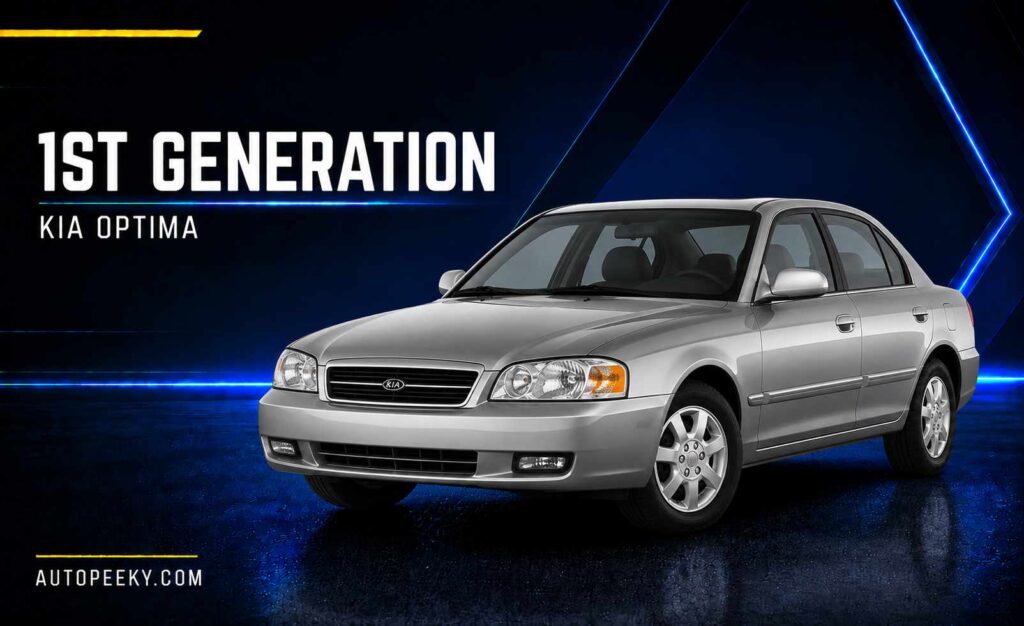
The first-generation Optima arrived in the US in 2001 as Kia’s attempt to break into the crowded midsize sedan market. It offered value pricing and a surprising feature list but the early build quality reflected Kia’s status as an emerging brand still finding its feet on American roads.
Worst Years: 2001 & 2002 – Kia Optima Years to Avoid
The 2001 and 2002 Kia Optima models are the weakest first-gen years by a significant margin. Transmission failure was the dominant complaint, automatic transmission units failing prematurely, often before 80,000 miles, and requiring costly replacement. Engine stalling affected both years, traced in large part to a defective crankshaft position sensor that triggered a NHTSA recall.
Suspension deterioration, faulty door locks, and power window failures added quality-of-life frustrations on top of the more serious mechanical concerns. Electrical reliability across both years was below par for the class.
At this point in the brand’s evolution, Kia simply hadn’t achieved the build consistency needed for confident used-car buying. Skip both.
Neutral Years: 2003 & 2004
The 2003 and 2004 models reflected Kia’s gradual improvement curve. Engine options a 2.4L I4 and 2.7L V6 were carried over with modest refinements. Transmission issues persisted but at reduced rates. Electrical problems with door locks and power windows continued to generate complaints.
Fuel economy averaged 21 city / 30 highway MPG acceptable for the era and class. These years are middle-of-the-road buys: not actively risky in the way 2001–2002 were, but not compelling enough to seek out specifically when better alternatives exist.
Best Years: 2005 & 2006 – Best 1st Gen Kia Optima
By 2005 Kia had meaningfully improved the Optima’s reliability profile. The 2.4L Sirius II I4 and 2.7L Delta V6 were the most sorted powertrains the first generation offered, with fuel economy reaching up to 24 city / 34 highway MPG in the more efficient configurations.
Transmission choices covered both a 5-speed manual and 4/5-speed automatic. Interior materials improved noticeably, and safety equipment was expanded ABS brakes and stability control became available on higher trims.
Lingering complaints about power window malfunctions and occasional engine concerns didn’t disappear entirely, but they were significantly reduced from early-gen levels. Owner satisfaction scores for 2005 and 2006 were the highest the first generation achieved. If the budget demands a first-gen Optima, 2005 or 2006 is the only answer. For buyers open to a full-size alternative in the same era, check out our breakdown of the best & worst Toyota Avalon years; it covers a similar buyer profile with a different reliability story.
2nd Generation Kia Optima (2007–2010): Best & Worst Years
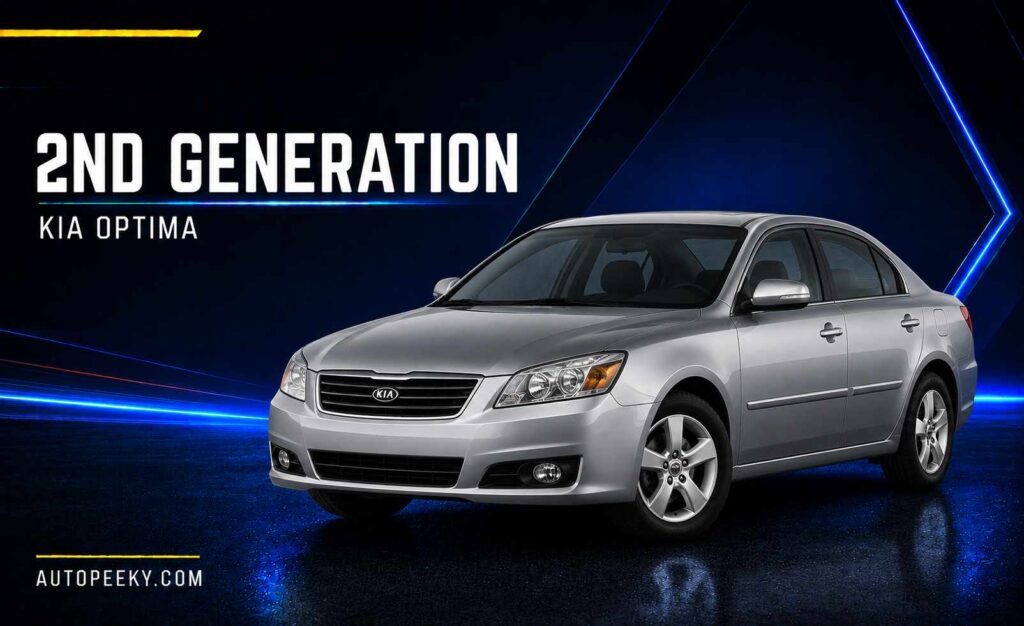
The second generation arrived wider, longer, and more refined, a proper step forward in design and interior quality. But the early years carried serious problems that should keep any used buyer at a careful distance.
Worst Years: 2007 & 2008 – Kia Optima Years to Avoid
The 2007 Kia Optima became notorious for dim, frequently burning-out headlights, a safety issue that impaired nighttime visibility and generated consistent owner frustration. More seriously, transmission shift cable failures caused sudden, uncontrolled downshifting a recall-level safety concern that Kia was slow to fully address.
Engine compartment fires were reported in 2007 and 2008, linked to oil leaks and fuel system faults that created ignition risk in the engine bay. NHTSA complaint volumes for both years were among the highest the second generation produced.
Engine stalling was an additional documented concern in both years. The combination of fire risk, transmission failures, headlight safety issues, and stalling complaints makes 2007 and 2008 years to skip without hesitation.
Best Years: 2009 & 2010 – Best 2nd Gen Kia Optima
By 2009, Kia had addressed most of the critical first-year problems. The 2009 and 2010 Optimas represent a genuine reliability improvement and they offer an appealing used-car proposition for buyers who want second-gen styling at an older-car price.
Engine options included a 175hp 2.4L I4 and a 190hp 2.7L V6, paired with either a 5-speed manual or 5-speed automatic. Fuel economy improved to 22 city / 32 highway MPG. Safety systems gained stability control as standard and added brake assist.
A refreshed grille, updated interior trim, and an enhanced audio system made these feel like a genuinely different car from 2007–2008. NHTSA complaint volumes were substantially lower. Minor exterior lighting glitches and occasional transmission behavior were the only real concerns acceptable for the price and age.
The 2009 or 2010 Kia Optima is AutoPeeky’s recommendation for budget buyers wanting a second-gen car.
3rd Generation Kia Optima (2011–2015): Best & Worst Years

This is the most important section of this entire guide and the one that separates buyers who do their research from those who get burned.
The third-generation Kia Optima looked like a breakthrough. Bold Schreyer-designed styling, genuinely upscale interior quality, competitive pricing, and strong fuel economy positioned it as a legitimate challenger to the Accord and Camry. Sales exploded. Then the Theta II engine problem hit.
Worst Years: 2011, 2012, 2013 & 2014 – The Kia Optima Years to Avoid Most
<cite index=”13-1″>Kia started using 2.0-liter and 2.4-liter Theta II GDI engines in the 3rd generation, and they are among the worst four-cylinder engines ever produced. The manufacturing process left behind metallic debris, which would quickly lead to excessive wear and tear. The engine malfunctions became so widespread that there was eventually a class-action lawsuit, which Kia ultimately settled, leading the automaker to extend warranties and offer repair compensation.
Here’s what that meant in practice for Optima owners:
Metal debris contamination circulated through the oil system from the factory, scoring rod bearings, connecting rods, and cylinder walls. The result: a distinctive knocking sound from the engine bay that rapidly escalated to complete engine seizure often before 100,000 miles, and in many cases before 60,000 miles. Engine replacement costs run $4,000–$6,000 at a dealership.
<cite index=”16-1″>The 2013 Optima alone received nearly 1,300 complaints.</cite> That is an extraordinary complaint volume for a single model year of any vehicle.
Fire risk elevated the danger beyond inconvenience. <cite index=”20-1″>Kia recalled over 140,000 of its 2013 and 2014 Optima sedans because of a fuel leak that may lead to a fire. The problem was caused by a faulty fuel hose that could deteriorate quickly and develop cracks, causing fuel to leak.</cite> NHTSA was simultaneously investigating over 3,000 reports of non-collision fires in Theta II-powered vehicles across the Kia and Hyundai lineup.
Additional issues across 2011–2014:
- Fuel seepage from high-pressure fuel pipes (2011 recall)
- Defective engine bearings causing sudden stalls (2011 recall)
- Fuel delivery hose cracking and leaking (2013–2014 recall)
- Transmission hesitation and rough shifting
- Paint chipping and premature clear coat failure
- Steering concerns in 2014
<cite index=”14-1″>The years between 2012 and 2015 had many similar issues, with an average of 500–1,000 complaints filed across the four years.</cite>
AutoPeeky’s position is clear: the 2011, 2012, 2013, and 2014 Kia Optima are the most important years to avoid in the model’s entire history. The Theta II engine crisis wasn’t a minor recall item, it was a fundamental manufacturing defect that affected a massive percentage of the production run and cost owners thousands of dollars. This kind of debut-generation reliability failure is a pattern we’ve seen in other popular models too our guide on Jeep Compass years to avoid a similarly troubled early run worth reading before you buy any used compact crossover.
Best Year: 2015 – Best 3rd Gen Kia Optima
The 2015 Optima is the only third-generation year AutoPeeky considers with any confidence and even then, with important caveats.
Kia partially addressed the Theta II issues for 2015 through extended warranty programs and engineering adjustments. Powertrain options were strong: a 192hp 2.4L Theta II I4, a potent 274hp 2.0L Turbo I4, and a 199hp 2.4L hybrid configuration paired with a 6-speed automatic delivering 23–24 city / 34–35 highway MPG.
The 2015 added Bluetooth, updated infotainment, and a more refined interior. NHTSA complaint volumes, while still elevated compared to best-in-class rivals, were lower than 2011–2014 levels.
4th Generation Kia Optima (2016–2020): Best & Worst Years
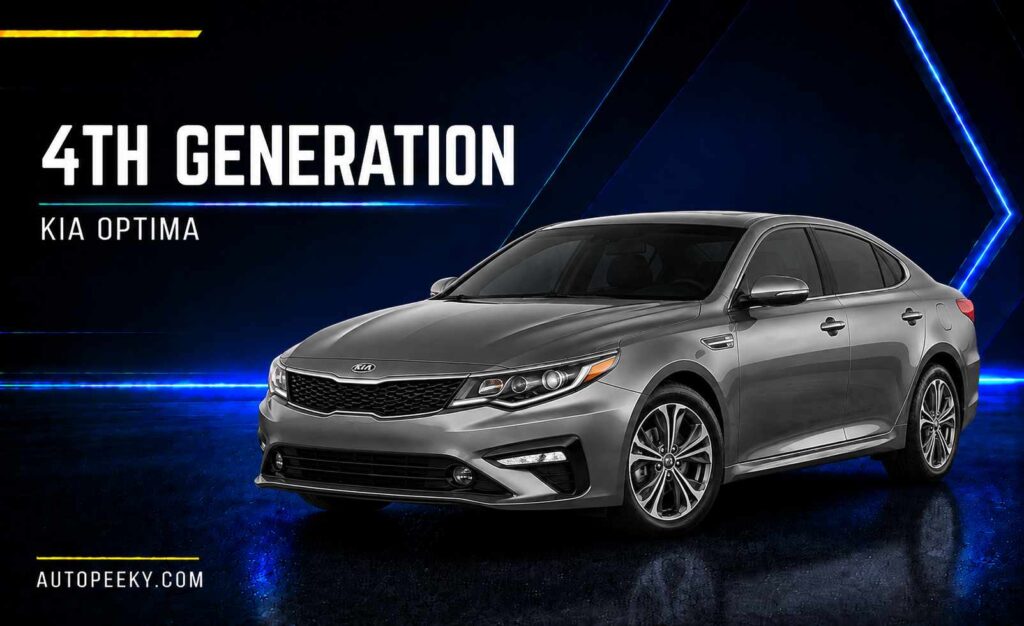
The fourth generation brought a complete exterior and interior redesign, new powertrain options with improved engine architecture, and a stronger safety technology package. This is where the Kia Optima finally became what it always promised to be: a genuinely competitive midsize sedan without the reliability asterisk.
Worst Year: 2016 – Kia Optima Year to Avoid
2016 was the debut year of the new generation and as with so many first-year models, it stumbled.
Excessive oil consumption and engine oil leakage were the primary complaints, generating significant NHTSA submissions. Some owners reported needing to add oil between service intervals, a clear symptom of internal engine wear progressing too quickly.
Headlight malfunctions returned as recurring theme units flickering, dimming unexpectedly, or failing outright mirroring the 2007–2008 headlight issues from the second generation. On a new platform, this was a frustrating regression.
Despite offering excellent fuel economy 24–28 city / 35–39 highway MPG with the turbocharged variants and new tech features including a standard rearview camera, the 2016’s mechanical complaints disqualify it from the recommended column. The 2017 is a much cleaner buy.
Best Years: 2017, 2018, 2019 & 2020 – Best Kia Optima Years Overall
These four years represent the Kia Optima at its absolute peak — and they make the strongest case for the model as a legitimate used-car value in the midsize sedan segment.
By 2017, Kia had resolved the oil consumption and headlight concerns from the debut year. The powertrain lineup was excellent:
- 185hp 2.4L I4 smooth, reliable, 25 city / 36 highway MPG
- 178hp 1.6L Gamma Turbo I4 fuel-efficient with 7-speed DCT
- 245hp 2.0L Turbo I4 genuinely quick, 22 city / 30 highway MPG
Technology improved dramatically: Apple CarPlay and Android Auto became available, alongside advanced safety features including blind-spot monitoring, rear cross-traffic alert, lane departure warning, and automatic emergency braking on higher trims.
Interior quality reached its highest level, with a genuinely premium feel on EX and SX trims that compared favorably with the Accord and Camry.
Reliability by year:
- 2017 NHTSA complaints dropped significantly from 2016. Consumer Reports reliability score improved. Strong owner satisfaction across Edmunds and KBB.
- 2018 One of the cleanest Optima years. Low complaint volume, strong owner satisfaction. The 2.4L powertrain is fully sorted.
- 2019 Further refinements. Favorable VehicleHistory and Cars.com ratings. Low recall activity.
- 2020 Final Optima production year. Most refined of the generation. Strong Consumer Reports and Cars.com scores. Excellent value as an end-of-run model that depreciated well.
AutoPeeky.com top recommendation: the 2019 or 2020 Kia Optima they combine the best technology, the cleanest reliability record, and the strongest owner satisfaction of the model’s entire 20-year run. Available at attractive used prices now that the K5 has replaced them. If fuel efficiency is a priority alongside the sedan experience, it’s also worth comparing against the best Toyota Venza years the 2022+ hybrid Venza is a strong alternative in this price range.
The Theta II Engine: What Every Kia Optima Buyer Must Know
If you’re considering any 2011–2016 Kia Optima, the Theta II engine issue requires your full attention before you sign anything.
Kia extended warranty coverage on many affected vehicles to 10 years / 100,000 miles for engine failures attributable to this defect. But that coverage only applies if:
- The vehicle was properly registered and documented under Kia’s extended warranty program
- The oil change history demonstrates regular maintenance intervals
Before buying any 2011–2015 Optima: check for the recall at NHTSA.gov using the specific VIN, request complete service records, and have a mechanic listen for engine knock during a thorough test drive. If any of these items can’t be confirmed, move on the risk isn’t worth it.
Kia Optima Year-by-Year Summary
| Year | Rating | Key Notes |
| 2001 | ❌ Avoid | Transmission failure, crankshaft sensor recall, stalling |
| 2002 | ❌ Avoid | Same problems as 2001, suspension deterioration |
| 2003 | ⚠️ Neutral | Improving but transmission and electrical issues persist |
| 2004 | ⚠️ Neutral | Acceptable, not compelling — check carefully |
| 2005 | ✅ Best | Best 1st gen year — improved engine, higher owner satisfaction |
| 2006 | ✅ Best | Solid 1st gen buy — best reliability of the generation |
| 2007 | ❌ Avoid | Headlight failures, transmission recall, engine fires |
| 2008 | ❌ Avoid | Continued fire risk, stalling, shift cable failures |
| 2009 | ✅ Best | Reliability sorted — best 2nd gen buy |
| 2010 | ✅ Best | Strong engine options, improved safety, low complaints |
| 2011 | ❌ Avoid | Theta II engine failures, fuel pipe recall |
| 2012 | ❌ Avoid | Engine seizures, ~500–1,000 complaints |
| 2013 | ❌ Avoid | ~1,300 complaints, fuel hose fire recall |
| 2014 | ❌ Avoid | Ongoing Theta II failures, fuel hose recall |
| 2015 | ✅ Best* | Best 3rd gen — confirm all recalls completed before buying |
| 2016 | ❌ Avoid | Oil leaks, headlight failures, elevated 4th gen debut issues |
| 2017 | ✅ Best | Sorted 4th gen — strong reliability, full tech package |
| 2018 | ✅ Best | Low complaints, excellent powertrain, high owner satisfaction |
| 2019 | ✅ Best | AutoPeeky top pick — clean reliability, great features |
| 2020 | ✅ Best | Final year — most refined Optima ever, excellent value |
*2015 recommended with confirmed recall completion only
Is the Kia Optima a Good Car?
Yes but only in the right years. Here’s AutoPeeky’s honest, balanced assessment:
Where the Optima excels (2017–2020):
- Sharp, distinctive styling that hasn’t aged poorly
- Genuinely premium interior quality on EX/SX trims
- Strong turbocharged engine options with real performance
- Competitive fuel economy up to 37 MPG highway
- RepairPal annual maintenance cost: approximately $471/year below the midsize sedan average
- Advanced safety suite comparable to Accord and Camry
Where the Optima falls short:
- The 2011–2015 Theta II era is one of the worst reliability chapters of any mainstream sedan in recent history
- Resale value trails Honda and Toyota significantly
- The discontinuation (replaced by K5) means the Optima brand is no longer supported with new dealership incentives
Versus the competition: In the 2017–2020 years, the Optima competes strongly on features and value per dollar. Where it loses is long-term residual value and the shadow of the Theta II era that damaged brand trust. Buyers who do their research and stick to 2017–2020 models will find a genuinely rewarding car. If you’re cross-shopping compact luxury options on a similar budget, our guide to the best & worst Buick Encore years is another useful read. The 2018+ Encore offers a very different but equally compelling used-car case.
Common Kia Optima Problems: What to Inspect Before You Buy
Regardless of which year you’re targeting, AutoPeeky flagged these recurring issues across the Optima’s history:
1. Engine knocking (2011–2015): Listen for any ticking or knocking at startup or under load. This is the Theta II’s warning signal. Walk away immediately.
2. Oil consumption (multiple years): Request oil change records. More than 1 quart needed between changes is a red flag. Check for blue exhaust smoke.
3. Headlight reliability (2007, 2008, 2016): Test both headlights on the specific test drive. Flickering or dimness should be a negotiating point at minimum.
4. Fuel system recall completion (2011–2015): Verify at NHTSA.gov that both the engine and fuel hose recalls are marked completed on the VIN.
5. Transmission behavior: Any hesitation, sharp downshifts, or slipping during a test drive warrants a mechanic’s transmission inspection.
6. Airbag system recalls (multiple years): Several Optima generations had airbag-related recalls. Confirm all are resolved via VIN check before purchase.
Conclusion
The Kia Optima had a genuinely great final act. The 2017–2020 fourth-generation models are well-sorted, feature-rich, and reliable cars that deserve consideration alongside the Accord, Camry, and Altima. The problem is that getting to those good years required surviving one of the most documented reliability crises in modern sedan history.
Buy the 2019 or 2020 for the best overall Optima experience. If budget pushes you older, the 2017 or 2018 are excellent alternatives. Need to go back further? The 2009–2010 second-gen models offer solid value at lower prices.
Avoid the 2011, 2012, 2013, and 2014 under all circumstances no price is low enough to justify the Theta II engine risk. The 2001, 2002, 2007, 2008, and 2016 are also best skipped.
Always verify the VIN at NHTSA.gov, get an independent pre-purchase inspection from a Kia-experienced mechanic, and confirm every open recall is resolved before completing any purchase.
Have a question about a specific Optima year, trim, or the K5 replacement? Drop it in the comments the AutoPeeky team reads every one.
FAQ’s
What Kia Optima years should I avoid?
The Kia Optima years to avoid are 2001, 2002, 2007, 2008, 2011, 2012, 2013, 2014, and 2016. The most critical years to skip are 2011–2014, which were powered by the defective Theta II engine responsible for widespread engine seizures, fire recalls, and nearly 1,300 NHTSA complaints in 2013 alone. These are the most important Kia Optima years to avoid in the model’s entire 20-year history.
What is the best year for a Kia Optima?
The best Kia Optima years are 2017, 2018, 2019, and 2020. AutoPeeky’s top pick is the 2019 or 2020 they offer the most advanced technology, cleanest reliability record, lowest NHTSA complaint volumes, and strongest owner satisfaction of any Optima model year. Both are now available at attractive used-car prices.
Did the Kia Optima have engine fires?
Yes. The 2013 and 2014 Kia Optima were recalled due to fuel hose cracks that created a fire risk. NHTSA simultaneously investigated over 3,000 reports of non-collision engine compartment fires across Theta II-powered Kia and Hyundai vehicles. Fire risk was a real, documented safety concern not a fringe complaint in these model years.
Is the 2013 Kia Optima a good car?
No. The 2013 Kia Optima is one of the worst cars to buy used. It generated nearly 1,300 NHTSA complaints, an extraordinary volume due to Theta II engine failures, fuel hose fire recalls, and engine seizures. AutoPeeky strongly recommends avoiding the 2013 Optima regardless of price, mileage, or condition.
How reliable is the Kia Optima overall?
The Kia Optima’s reliability is generation-dependent. The 2017–2020 fourth-generation models are above-average reliable, with RepairPal estimating approximately $471/year in maintenance costs. The 2011–2015 third-generation models are among the least reliable midsize sedans of the last two decades due to the Theta II engine defect. Overall, the brand’s reputation improved dramatically in the final years of production.
What replaced the Kia Optima?
The Kia Optima was discontinued after 2020 and replaced by the Kia K5 starting with the 2021 model year. The K5 shares a platform with the Hyundai Sonata and is built on Kia’s newer, more refined architecture. Early reliability data on the K5 is strong, making it worth considering alongside used Optima models.
What should I check before buying a used Kia Optima?
Before buying any used Kia Optima: (1) check the full recall history at NHTSA.gov using the specific VIN; (2) for 2011–2015 models, confirm the engine and fuel hose recalls are completed and request full oil change records; (3) listen carefully for engine knock on startup and during the test drive; (4) watch for oil consumption evidence (blue smoke, dipstick levels low at service time); (5) test all headlights on 2007–2008 and 2016 models; (6) have a Kia-experienced mechanic perform a pre-purchase inspection before signing.