
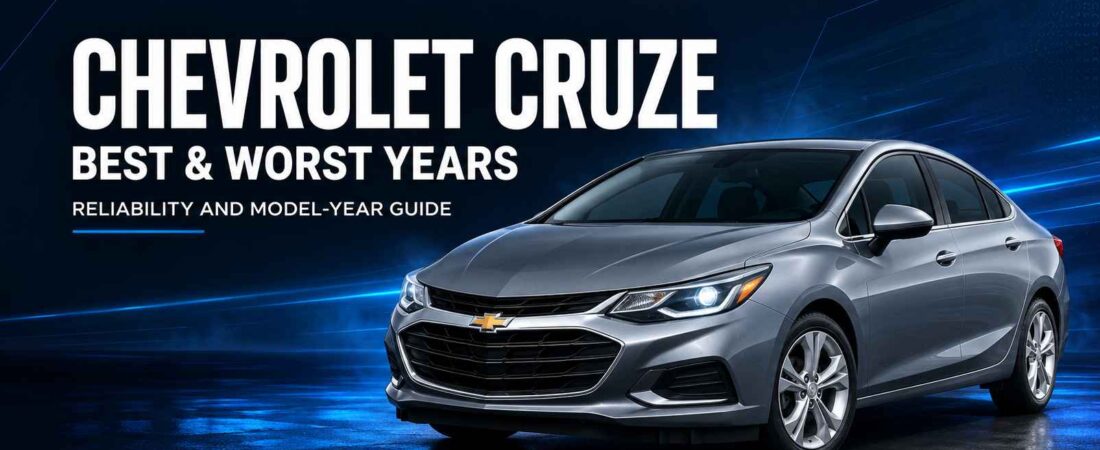
The Chevrolet Cruze was Chevrolet’s last small sedan, and for a while it was a genuinely good value. It posted strong crash-test scores, returned around 30 mpg and cost far less than its Japanese rivals. In FIXD’s 2023 price comparison, an average 2015 Cruze sold for $5,575 while a 2015 Toyota Corolla averaged $10,781. That gap is exactly why so many shoppers end up searching for Chevy Cruze years to avoid. Some model years are cheap for a reason.
The short version: the first-generation cars from 2011 to 2014 carry the heaviest repair risk, and the first year of the redesign (2016) is a smaller but real gamble. The 2017 to 2019 cars are the ones worth shopping. In this guide, AutoPeeky ranks every US model year using NHTSA complaint and recall data, owner repair-cost surveys and published reliability research, so you can see which Chevy Cruze years to avoid and which ones deserve your money.
Before you look at any specific car, run it through our Should I Buy? tool. Enter the year, make and model and you get an instant look at that vehicle’s NHTSA complaint history and open recalls.
Chevy Cruze Generations at a Glance
The Cruze reached US showrooms for the 2011 model year and ended with the 2019 model, when GM stopped building small sedans for North America and moved its focus to SUVs. There are two generations, and the dividing line sits between 2015 and 2016.
| Generation | US model years | Engines | Why it matters |
| First generation | 2011 to 2015 (a carryover version was sold as the 2016 Cruze Limited, largely to fleets) | 1.8L four-cylinder, 1.4L turbo, optional turbo diesel on some cars | Source of most reliability complaints |
Chevy Cruze Years to Avoid at a Glance
Here is AutoPeeky’s ranking for every US model year:
| Generation | Best years | Neutral years | Years to avoid |
| First generation (2011-2015) | None | 2015 | 2011, 2012, 2013, 2014 |
| Second generation (2016-2019) | 2017, 2018, 2019 | None | 2016 |
The quick answer: the Chevy Cruze years to avoid are 2011, 2012, 2013, 2014 and 2016. Target 2017, 2018 or 2019. 2015 is the only first-generation year worth a look, and only at a low price with a clean inspection.
First Generation Chevy Cruze (2011-2015): Best and Worst Years
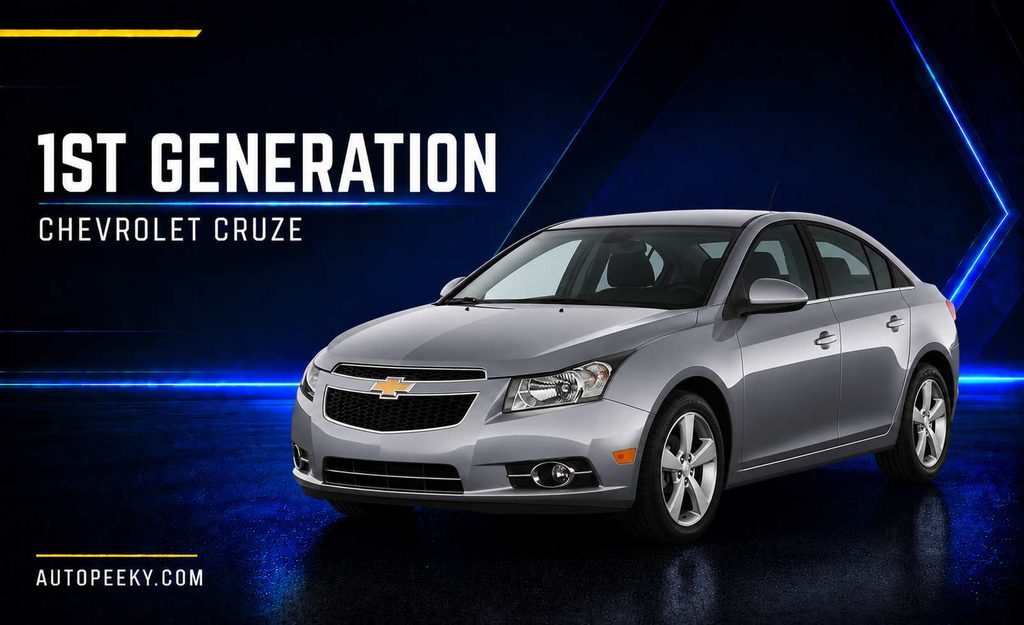
The first-generation Cruze replaced the Cobalt and arrived with real strengths: a quiet ride, roomy cabin and fuel economy that beat many rivals. The problems sat underneath, in the engine bay and the transmission.
Chevy Cruze Years to Avoid: 2011, 2012, 2013 and 2014
If you only remember one thing from this guide, make it this: the 2011 to 2014 Cruze is the riskiest block of years in the model’s history.
2011 is the worst of them. In forcar.org’s analysis of complaints per production run, the 2011 scored 6.86 against 1.33 for the 2019, a gap of more than five times between two cars wearing the same badge. FIXD’s engine reliability scores back this up, rating the 2011 and 2012 at just 3 out of 10.
The money side is where it hurts. According to FIXD’s Cruze analysis, owners reported average annual maintenance and repair spending of $1,094 for 2011 and $911 for 2013. FIXD also found that every year in this group carries at least a 33% chance of an engine repair costing $500 or more. The 2011 has a 27% chance of expensive transmission work, and the 2013 sits at 18%, both higher than any other Cruze year.
The failures that show up again and again:
- Automatic transmission failure. Owners of the first-generation 6-speed automatic have reported failures within about 80,000 miles, with a rebuild running $2,500 to $3,600 according to REREV.
- Water pump and coolant leaks. These are most associated with the 1.4L turbo from 2011 to 2014. REREV reports a 2015 recall tied to the water pump, so ask whether the work was done on any car you consider. A sweet coolant smell inside the cabin is a classic warning sign.
- Oil leaks and valve cover vacuum leaks. FIXD notes the valve cover leak (trouble code P1101) can appear on any Cruze year, and the repair costs $2,532 to $3,046.
- Electrical annoyances. Battery terminal problems, radio faults and instrument issues turn up regularly in owner reports.
There are bright spots. These cars returned 29 to 30 mpg and averaged 4.6 to 4.8 out of 5 in NHTSA crash testing. But a low asking price (FIXD’s 2023 figures put 2011 to 2014 cars between $4,190 and $5,129) is a poor deal if it comes with a multi-thousand-dollar repair waiting down the road. Before you commit to any of these cars, run the 5-Year Ownership Cost Calculator with a realistic repair allowance and compare the total with a newer car.
2015 Chevy Cruze: The Cautious Option
The final first-generation year is the least risky of the old cars, but it is not a clean bill of health. FIXD rates its engine reliability 5 out of 10, reports average annual repair spending of $839 and puts the chance of a $500 or larger engine repair at 29%. NHTSA lists four recalls for 2015, with the more serious ones involving a defective parking brake cable and the steering gear.
Our view: the 2015 makes sense only if your budget rules out a 2017 or newer and the specific car has complete service records. Check its recall status with our VIN and Recall Check, and look at the car’s 2015 recall listing on NHTSA before you hand over money.
Second Generation Chevy Cruze (2016-2019): Best and Worst Years

The redesigned Cruze looked sharper, weighed less and swapped the old engines for a new 1.4L turbo. It was a clear step forward, with one exception: the first year.
2016 Chevy Cruze: A Year to Avoid When You Have Options
The 2016 is the mildest entry on our Chevy Cruze years to avoid list, and the reasoning is the usual one for any first-year redesign. FIXD rates it 7 out of 10 for engine reliability, but its repair-likelihood data is less comforting: a 73% chance of a repair costing $500 or more, including 27% for engine work and 17% for transmission work. Owners in FIXD’s survey were also more likely than for any other year to call their 2016 expensive to repair.
REREV adds reports of start-stop systems causing stalls, misaligned headlights and electrical faults. The 2016 is not a disaster, but a 2017 or 2018 costs little more and removes most of the first-year risk. Skip the 2016 unless you find a well-documented car at a clearly lower price.
Best Chevy Cruze Years: 2017, 2018 and 2019
These three years are the Cruze at its best. FIXD scores them 7 to 9 out of 10 for engine reliability, owner reliability scores run from 8 to 10, and average annual upkeep falls to $375 to $656. They also have the fewest recalls of any Cruze, with the most serious being a potential fuel leak after a crash.
What you get:
- Efficient 1.4L turbo. 153 horsepower and around 32 mpg in EPA terms. You can confirm the rating for a specific engine and trim at fueleconomy.gov, and plug the figures into our Fuel Cost Calculator to see what you would spend each year.
- Body style choice. A hatchback joined the lineup for 2017, with an optional turbo diesel on some cars. Diesel models can need extra emissions and fuel filter servicing, so ask for records.
- Safety technology. Blind-spot monitoring, forward collision alert and other driver aids were available, and crash scores stayed strong.
Year by year:
- 2017: A solid entry point. Fewer complaints than 2016 and a lower repair bill.
- 2018: Excellent owner scores, though FIXD flags a 28% chance of an expensive engine repair, so have the engine checked. Some owners report start-stop stalling.
- 2019: AutoPeeky’s top pick. FIXD gives it a 9 out of 10 reliability score, the best of any year, and forcar.org’s 1.33 complaints per production run is the lowest on record.
A Note on 2008 to 2010 Cruze Listings
Some guides list the 2008, 2009 and 2010 Cruze as the best years. Those cars were sold in other markets. The Cruze did not reach US showrooms until the 2011 model year, so those years are not realistic options for most US shoppers, and their low complaint counts in some data sets say little about the cars you can actually buy.
Common Chevy Cruze Problems and What They Cost
| Problem | Where it shows up | What to look for | Reported repair cost |
| Valve cover vacuum leak (P1101) | All years | Rough idle, check engine light | $2,532 to $3,046 (FIXD) |
| Water pump and coolant leak | 2011-2014 1.4L turbo | Coolant smell, low coolant, overheating | Varies, get a quote |
| Automatic transmission failure | Mainly 2011-2013 | Harsh or slipping shifts | $2,500 to $3,600 for a rebuild (REREV) |
| Boost sensor fault (P0299) | Turbo cars, several years | Loss of power | $200 to $220 for the sensor (FIXD) |
| Catalytic converter or oxygen sensor (P0420) | Several years | Check engine light | Sensor $275 to $500, converter up to $2,400 (FIXD) |
| Start-stop stalling | 2016-2018 | Engine cuts out when stop-start engages | Varies |
FIXD notes that Chevrolet’s emissions warranty may cover catalytic converter repairs, so ask a Chevrolet dealer about coverage on any specific car before paying out of pocket.
What a Used Chevy Cruze Really Costs to Own
Across the nine model years it analyzed, FIXD found average annual maintenance and repair spending of $701. The range is wide: $1,094 for the worst year against $375 for the best. That spread is the real difference between a cheap Cruze and a good one.
A few ways to put numbers on your decision:
- Use the Used Car Price Estimator to see a depreciation-based value range, then cross-check against local listings before you negotiate.
- Project resale value with the Depreciation Calculator. Newer Cruzes cost more up front but typically hold their value better than the 2011 to 2014 cars.
- Work out what fits your budget with the Car Affordability Calculator, then check the loan cost with the Monthly Payment Calculator.
Chevy Cruze Year-by-Year Summary
| Year | Rating | Key notes |
| 2011 | Avoid | Worst complaint rate, transmission and engine risk, $1,094 average yearly repairs |
| 2012 | Avoid | Engine reliability score of 3 out of 10, coolant and oil leaks |
| 2013 | Avoid | Transmission risk, $911 average yearly repairs |
| 2014 | Avoid | At least 33% chance of costly engine repair, water pump concerns |
| 2015 | Neutral | Best of the first generation, four recalls to verify |
| 2016 | Avoid | First-year redesign, 73% chance of a $500+ repair, start-stop stalling |
| 2017 | Best | Fewer recalls, lower upkeep, solid reliability |
| 2018 | Best | Strong owner scores, have the engine checked |
| 2019 | Best | Top pick, best reliability and complaint data |
How to Check a Used Chevy Cruze Before You Buy
- Run the VIN. Use our VIN and Recall Check for live NHTSA recall data. Note that it covers recalls only, not accident or title history. You can also search the NHTSA recalls database directly.
- Ask for service records. Look for coolant system work, water pump replacement on 2011 to 2014 cars and regular oil changes.
- Check under the hood cold. Look at the coolant level and for oil residue around the valve cover, and smell for coolant inside the cabin.
- Test the transmission. Drive in town and on the highway. Harsh shifts, slipping or hesitation on a first-generation car is a walk-away sign.
- Test start-stop. On 2016 to 2018 cars, make sure the engine restarts smoothly every time.
- Scan for codes. Stored codes such as P1101, P0299 and P0420 point to known trouble spots.
- Get an independent inspection from a mechanic who does not work for the seller.
Is the Chevy Cruze Worth Buying?
A 2017 to 2019 Cruze can be a sensible, affordable commuter with good fuel economy and strong crash scores. It trails the Honda Civic and Toyota Corolla on resale value and long-term reputation, but that also means a lower purchase price.
If you want to compare, our guides on Nissan Sentra years to avoid, Hyundai Elantra years to avoid and the best and worst Kia Forte years cover the Cruze’s closest rivals, each with its own pattern of weak early years and stronger later ones. For a smaller and cheaper car, see the best and worst Hyundai Accent years. GM’s 1.4L turbo engine family also powered the Buick Encore, and our best and worst Buick Encore years guide shows how much the model year matters for that engine too.
Final Verdict on Chevy Cruze Years to Avoid
The Chevy Cruze years to avoid are clear: 2011, 2012, 2013 and 2014 carry the highest risk of expensive engine, cooling and transmission repairs, and the 2016 is a first-year redesign that is best skipped when a 2017 or newer fits your budget. The 2015 is acceptable only at a bargain price with complete records.
Buy a 2019 if you can, with the 2018 and 2017 as close alternatives. They combine the lowest complaint rates, the fewest recalls and the lowest annual upkeep in the Cruze’s history.
These rankings come from published data, not hands-on testing, so treat them as a starting point. Before you buy, check the car’s VIN with the VIN and Recall Check, run the exact year through Should I Buy?, and get an independent inspection. Have a question about a specific Cruze year or trim? Leave it in the comments and the AutoPeeky team will take a look.
Frequently Asked Questions
What year Chevy Cruze should I avoid?
The Chevy Cruze years to avoid are 2011, 2012, 2013, 2014 and 2016. 2011 was the worst, with the highest complaint rate and heavy engine and transmission repair risk. The 2016 is a milder avoid because it was the first year of the redesign.
Which Chevy Cruze years are the best?
The 2017, 2018 and 2019 are the best Chevy Cruze years. The 2019 is our top pick, with FIXD’s highest reliability score (9 out of 10) and the lowest complaint rate on record.
What are the most common Chevy Cruze problems?
The most common problems are automatic transmission failure on first-generation cars, water pump and coolant leaks on the 1.4L turbo from 2011 to 2014, oil and valve cover leaks, electrical faults and, on 2016 to 2018 cars, start-stop stalling.
Is the 2016 Chevy Cruze a good car?
It is decent but not our first choice. FIXD rates its engine reliability 7 out of 10, yet it shows a 73% chance of a $500 or larger repair. A 2017 or 2018 usually costs only slightly more and avoids first-year redesign issues.
Why was the Chevy Cruze discontinued?
Chevrolet stopped building the Cruze for the US after 2019 as GM shifted production toward SUVs and trucks. The Malibu became the remaining Chevrolet sedan.
How long does a Chevy Cruze last?
With regular maintenance, many Cruzes pass 150,000 miles, and REREV reports some reaching 250,000. FIXD’s owner survey was more mixed: 19% of owners expected 200,000 miles, while 33% did not. Model year matters a great deal, with 2017 to 2019 cars the safest bets for high mileage.
Is a used Chevy Cruze expensive to maintain?
FIXD’s owner survey found average annual maintenance and repair costs of $701 across nine model years. A 2011 averaged $1,094 a year, while 2017 to 2019 cars ranged from $375 to $656.
What should I check before buying a used Chevy Cruze?
Check the VIN for open recalls, ask for coolant and transmission service records, inspect for coolant and oil leaks, test the transmission and start-stop system, scan for stored codes and have an independent mechanic inspect the car. Our Used Car Price Estimator can also help you judge whether the asking price is fair.