
The Nissan Sentra has been one of the most recognizable names in the affordable compact sedan segment for over four decades. Great fuel economy, a comfortable ride, competitive pricing on the surface it ticks all the boxes. But if you’re shopping for a used Sentra, the model year you choose matters more than with almost any other car in its class.
Here’s why: the Nissan Sentra years to avoid are defined almost entirely by one component: the Jatco Xtronic CVT transmission, introduced in 2013. Over 3,000 NHTSA complaints specifically about CVT failure, shuddering and overheating were filed for 2013–2019 Sentra models. CarComplaints.com awarded the 2013 Sentra its “Avoid Like the Plague” designation, the worst rating it gives any vehicle. The gap between the Sentra’s worst years and its best years is enormous.
The team at AutoPeeky has analyzed every Sentra model year from 2000 through 2024 cross-referencing NHTSA complaint databases, CarComplaints data, CarWhere’s severity-weighted complaint analysis, recall histories, Consumer Reports scores, and real owner accounts to give you one clear, trustworthy answer: which Nissan Sentra years should you avoid, and which are genuinely worth buying?
Before you decide on any specific car, it’s also worth running it through AutoPeeky Should I Buy? tool enter the year, make and model to get an instant NHTSA-powered verdict on that vehicle’s complaint history and open recalls.
Nissan Sentra Generations: A Quick Overview
The Sentra has run through eight generations in the US market. The two most important dividing lines for used-car buyers are 2013 (when the problematic Jatco CVT was introduced) and 2020 (when Nissan redesigned both the car and the CVT from the ground up).
| Generation | Years | Key Notes |
| 6th Generation (B15) | 2000–2006 | Reliable; pre-CVT era; conventional auto or manual |
| 7th Generation (B16) | 2007–2012 | Improved; CVT arrives late in gen — watch 2012 |
| 7th Gen Refresh (B17) | 2013–2019 | CVT crisis — worst reliability era in Sentra history |
| 8th Generation (B18) | 2020–Present | Full redesign — improved CVT, modern safety tech |
Nissan Sentra Years to Avoid – Quick Reference
Here is AutoPeeky’s complete ranking across every generation:
| Generation | ✅ Best Years | ⚠️ Neutral Years | ❌ Worst Years |
| 6th Gen (2000–2006) | 2000, 2001, 2002, 2003 | 2004 | 2005, 2006 |
| 7th Gen (2007–2012) | 2009, 2010, 2011 | 2007, 2008 | 2012 |
| B17 Refresh (2013–2019) | — | 2018, 2019 | 2013, 2014, 2015, 2016, 2017 |
| 8th Gen (2020–2024) | 2021, 2022, 2023 | 2024 | 2020 |
The fast answer: The Nissan Sentra years to avoid are 2005, 2006, 2012, and most critically 2013 through 2017. The 2013–2017 B17 refresh represents the worst reliability era in the Sentra’s modern history. Target 2021, 2022, or 2023 for the safest used-car buy. The 2009–2011 models are the strongest older alternatives.
6th Generation Nissan Sentra (2000–2006): Best & Worst Years
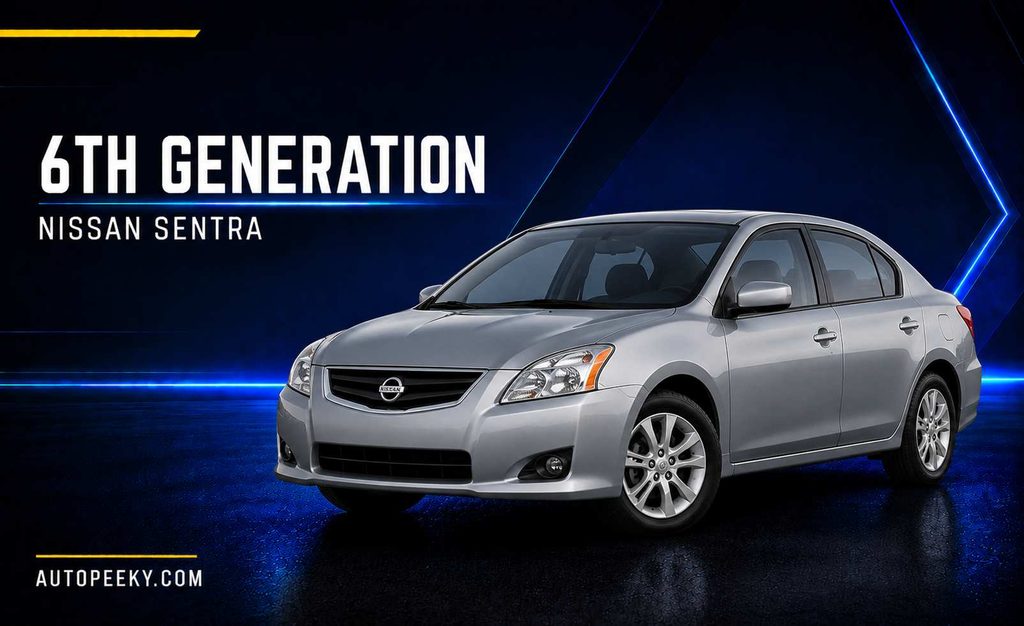
The sixth-generation Sentra ran from 2000 to 2006 as a no-frills, conventionally engineered compact sedan. Powered by a 1.8L four-cylinder paired with a 4-speed automatic or 5-speed manual, it was exactly what a budget commuter car should be: simple, reliable, and easy to maintain.
Best Years: 2000, 2001, 2002 & 2003
These four years represent the peak of the sixth generation’s reliability. The conventional powertrain, no CVT, no complicated electronics meant that problems were rare and repairs were straightforward when they did occur. Owner complaint volumes across all four years were low, and the 4-speed automatic proved durable well beyond 150,000 miles with routine maintenance.
Fuel economy was respectable at approximately 28–30 MPG highway. The 126 horsepower 1.8L engine was modest but adequate for commuter use. Manual transmission buyers had an even more dependable option; the 5-speed is widely regarded as bulletproof on this generation.
For buyers needing the most affordable entry point, a 2001 or 2002 Sentra with low mileage and documented service history remains one of the safer budget buys in the compact sedan segment. Before purchasing any of these older models, use AutoPeeky’s VIN & Recall Check to confirm no outstanding safety recalls remain open on the specific vehicle.
Neutral Year: 2004
The 2004 Sentra sits in neutral territory. A modest refresh updated the styling, and the powertrain was unchanged. Some owners reported blown head gasket issues, a problem that appears more frequently on 2004 models than on 2000–2003 examples. Suspension wear was also documented at rates slightly above the earlier years. Acceptable as a used buy if the price is right and an inspection confirms no head gasket symptoms, but the 2000–2003 cars are cleaner choices.
Worst Years: 2005 & 2006 – Nissan Sentra Years to Avoid
The 2005 model year introduced the revised 1.8L engine and with it, a documented pattern of engine problems including mass airflow sensor failures, rough idling, and misfires that made the car feel unreliable in everyday use. Head gasket failures continued and accelerated relative to 2004.
The 2006 Sentra is notable because it was the final year before the seventh-generation redesign and it arrived with the first implementation of a CVT option on the Sentra. This early CVT variant was the foundation of what would become a much more serious problem in 2013. The 2005 and 2006 models combined engine reliability concerns with the introduction of CVT uncertainty, making both years worth avoiding when better alternatives exist within the same generation.
7th Generation Nissan Sentra (2007–2012): Best & Worst Years

The seventh generation brought a complete redesign with more interior space, improved refinement, and updated safety equipment. The SE-R Spec V variant offered a sporting 2.0L engine with 200 horsepower. But the generation’s end was marked by the beginning of the CVT problems that would define the following era.
Neutral Years: 2007 & 2008
The 2007 and 2008 Sentras were solid early-generation models, but they came with some teething issues. Electrical system complaints were documented erratic instrument cluster behavior and AC system inconsistencies and brake component wear appeared somewhat prematurely in both years. These are acceptable used buys at the right price with a confirmed inspection, but the 2009–2011 models are significantly more refined.
Best Years: 2009, 2010 & 2011
These three years are the strongest of the seventh generation and represent excellent used-car value for buyers who need something older and more affordable.
By 2009, Nissan had addressed the electrical and brake concerns from the first two years. The 2.0L four-cylinder producing 140 horsepower paired with either a 6-speed manual or CVT was well-sorted, and importantly the CVT in this era behaved significantly better than what arrived in 2013. NHTSA complaint volumes for 2009–2011 were among the lowest of any seventh-generation year.
CarWhere’s data ranks the 2009 Sentra as a “Best” year with 55 total NHTSA complaints, one of the lowest figures in the model’s modern history. The 2010 and 2011 maintained similar low complaint profiles.
The optional SE-R Spec V in these years offered genuine driver appeal; the 2.0L turbocharged variant (available on SE-R) was a legitimately fun budget performance sedan. If you find a well-maintained 2009–2011 with a manual transmission, it’s one of the better older compact sedan values on the used market.
Worst Year: 2012 – Nissan Sentra Year to Avoid
The 2012 Sentra sits at the troubled end of the seventh generation. CarWhere records 180 NHTSA complaints for 2012 three times the complaint volume of 2009. The CVT in this final year of the generation showed early signs of the shuddering and hesitation behavior that would become catastrophic in 2013. Head gasket issues and brake concerns also returned.
The 2012 sits on the wrong side of the generation divide close enough to the CVT crisis years to carry meaningful risk. Skip it in favor of 2009–2011.
Nissan Sentra B17 (2013–2019): The Years to Avoid Most
This is the most critical section of this entire guide. If there is one era of Sentra ownership you need to understand thoroughly before shopping, it’s this one.
Worst Years: 2013, 2014, 2015, 2016 & 2017 – The Definitive Nissan Sentra Years to Avoid
The 2013 Sentra introduced a complete redesign and with it, the fully revised Jatco Xtronic CVT that became the defining reliability failure of modern Sentra history. CarWhere records 638 NHTSA complaints for 2013 alone, the highest of any Sentra model year across the entire dataset of 3,432 complaints analyzed. CarComplaints.com designated the 2013–2017 Sentra with its “Avoid Like the Plague” rating.
What went wrong with the CVT: The Jatco Xtronic CVT fitted to 2013–2019 Sentras was prone to overheating, shuddering under acceleration, jerking at low speeds, and in the most severe cases, complete transmission failure often before 80,000 miles and frequently between 60,000–100,000 miles. CVT replacement costs run 3,500–5,000+ at a dealership. Many independent shops refuse to rebuild Jatco CVTs, limiting repair options and driving costs higher.
The specific Nissan Sentra transmission years to avoid, ranked by complaint severity:
2013 (638 complaints): The worst single year in Sentra history. CVT failure, brake problems, engine issues and fuel system faults all generated elevated complaint volumes. Six recalls were issued. If there is one Sentra year to avoid with absolute certainty, it is 2013.
2014 (380 complaints, 5 recalls): Widely considered the second-worst Sentra year. CVT failures continued at high rates. Brake system complaints including spongy pedal feel and premature pad wear added to the reliability picture. REREV identifies 2014 as “the worst model year due to its numerous transmission-related issues.” Safety risks from brake failures in this year were documented at rates that generated NHTSA attention.
2015 (347 complaints, 3 recalls): The CVT problems continued. A notable new issue in 2015 was electric power steering (EPS) failures, an unexpected and dangerous problem where steering assist cut out without warning. Losing power steering while cornering is a crash risk. CVT shuddering remained the primary complaint category.
2016 (266 complaints, 6 recalls): Nissan introduced calibration changes to the CVT for 2016 in response to the 2013–2015 crisis. Complaint volumes dropped from the 2013 peak but six separate recalls were still issued, and CVT-related complaints remained elevated. The fact that 266 complaints were filed even after Nissan’s attempted fixes tells you the underlying problem was not fully resolved.
2017 (data consistent with 2016): The EPS concerns from 2015 carried forward. Automatic emergency braking was made standard on CVT-equipped trims from 2018 meaning 2017 models missed this important safety addition. CVT failure risk remained. AutoPeeky considers 2017 the last year of the definitively problematic B17 era.
The CVT extended warranty: Nissan extended the CVT warranty on 2013–2019 Sentra models from the standard 5 years/60,000 miles to 7 years/84,000 miles as part of a class-action settlement. This warranty only covers vehicles within that window; many used examples have already exceeded it. Before purchasing any 2013–2019 Sentra, confirm whether the specific vehicle is still within the extended warranty period.
Neutral Years: 2018 & 2019
The 2018 and 2019 models sit in neutral better than 2013–2017, but not clean enough for a confident recommendation.
The 2018 gained automatic emergency braking as standard equipment, a meaningful safety upgrade. CVT complaint volumes were lower than the 2013–2017 peak. However, the fundamental Jatco CVT design remained, and failure risk while reduced was not eliminated. The 2018 was also the final year before the pre-redesign styling became notably dated relative to competitors.
The 2019 continued the 2018 improvements. For buyers who specifically need a B17-era Sentra, the 2018 or 2019 are the only years worth considering and only with confirmed CVT service history and a pre-purchase transmission inspection. Run any 2018 or 2019 you’re considering through AutoPeeky’s Should I Buy? tool to check for any remaining open recalls before proceeding.
8th Generation Nissan Sentra (2020–2024): Best & Worst Years
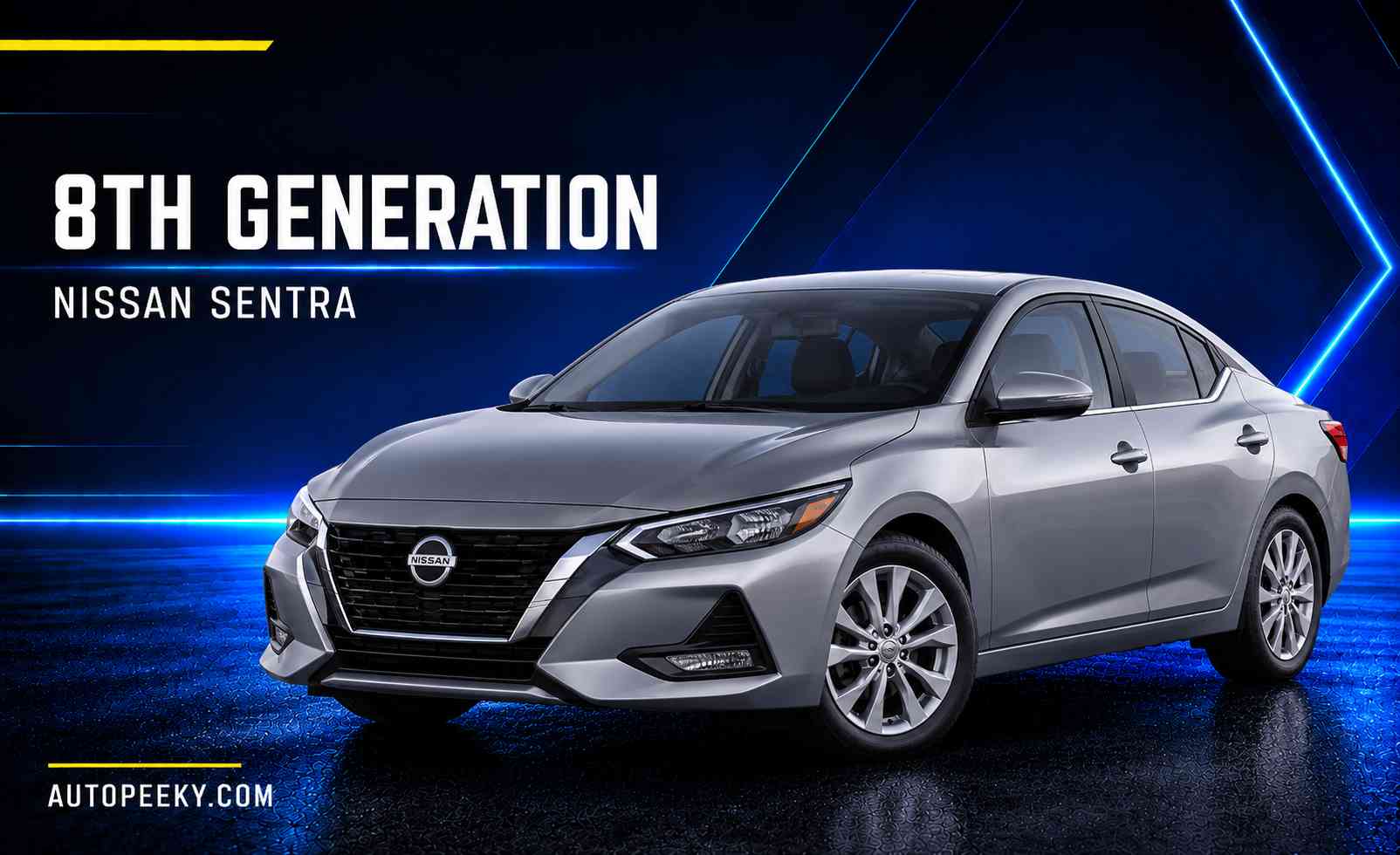
The 2020 redesign was the most significant update the Sentra had received in years and critically, it addressed the CVT problem that had defined a decade of troubled ownership.
Worst Year: 2020 – Nissan Sentra Year to Avoid
Despite being a full redesign, the 2020 Sentra’s debut year earned an avoid rating. Early production quality concerns generated higher complaint volumes than subsequent years consistent with the pattern seen across virtually every first-year redesign in the automotive industry.
The 2020 also arrived without Android Auto compatibility at launch, a notable technology gap that frustrated buyers. Some owners reported infotainment system glitches and connectivity failures. Electrical system complaints, while not at the level of the 2013–2017 era, were elevated relative to 2021 and beyond.
Given that the 2021 is available at comparable used-market prices with a noticeably cleaner reliability record, there is no compelling reason to choose a 2020.
Best Years: 2021, 2022 & 2023 – Best Nissan Sentra Years to Buy
These three years represent the Nissan Sentra at its best, a genuinely reliable, well-equipped, modern compact sedan that has shed most of the baggage from the B17 era.
The 8th generation’s 1.8L inline-four producing 149 horsepower pairs with a revised Xtronic CVT that uses a different design philosophy from the problematic 2013–2019 unit. NHTSA complaint volumes for 2021–2023 are dramatically lower than any B17-era year. CarWhere records only 18 complaints for 2023 compared to 638 for 2013. That is a 97% reduction in complaint volume between the worst and best eras.
Fuel economy is genuinely outstanding: 29 city / 39 highway MPG making the 8th gen Sentra one of the most fuel-efficient non-hybrid compact sedans available. Before you buy, it’s worth running those fuel economy numbers through AutoPeeky’s Fuel Cost Calculator to see exactly what you’d spend annually based on your driving habits especially if you’re comparing the Sentra against a hybrid alternative.
Safety technology improved dramatically: standard automatic emergency braking, blind-spot warning, rear cross-traffic alert, and lane departure warning across all trims from 2021 forward. The Sentra became an IIHS Top Safety Pick in the 8th generation.
Technology: Android Auto and Apple CarPlay standard. 8-inch touchscreen across most trims. The SR trim adds a sport-tuned suspension, larger wheels, and a more aggressive appearance genuinely competitive against the Civic Sport at a lower price.
Reliability by year:
- 2021 – Low NHTSA complaint volume, sorted from 2020 debut issues. CarWhere rates as “Best.” AutoPeeky’s top used-market recommendation.
- 2022 – Consistent with 2021. Clean reliability profile. Low complaint volume across all systems.
- 2023 – 18 NHTSA complaints, one of the lowest figures in the model’s modern history. CarWhere rates “Best.” Strong Consumer Reports data.
Neutral Year: 2024
The 2024 Sentra received modest styling updates and minor powertrain refinements. CarWhere records 31 NHTSA complaints and 3 recalls higher than 2023 but well within normal parameters for a model year this recent. The recalls covered a driveshaft defect (announced May 2026) and two minor items. All three should be verified as completed via VIN check before purchase.
The 2024 is a solid car; its neutral rating reflects that it’s still accumulating complaint data rather than any fundamental reliability concern. For buyers who want the newest available Sentra, the 2024 is a legitimate choice.
Nissan Sentra Transmission Years to Avoid – The CVT Problem Explained
Because CVT issues are the single most important reliability factor in the Sentra’s history, they deserve a dedicated section.
The Jatco Xtronic CVT (2013–2019): Introduced in the 2013 Sentra, the Jatco CVT used a belt-and-pulley system designed for fuel efficiency but proved vulnerable to heat buildup under sustained load particularly in stop-and-go traffic and on hills. The transmission fluid degraded faster than expected, and the mechanical components suffered accelerated wear. Symptoms progressed from shuddering and jerking to complete failure often with very little warning.
Over 3,000 NHTSA complaints specifically address CVT transmission failure, shuddering and overheating across 2013–2019 Sentra models. This is one of the most concentrated transmission complaint records of any compact sedan in the NHTSA database.
The CVT redesign (2020+): Nissan redesigned the Xtronic CVT for the 8th generation with improved cooling, revised fluid specifications, and updated software control logic. Early reliability data for the 2020+ CVT is significantly more positive and complaint volumes confirm the improvement. The 2020+ CVT is not infallible, but it has demonstrated substantially better real-world durability than its predecessor.
What to do before buying any 2013–2019 Sentra:
- Verify the VIN recall history at NHTSA.gov confirm all recalls are completed
- Confirm whether the specific vehicle is still within Nissan’s extended CVT warranty (7 years/84,000 miles from original sale date)
- Request full CVT service records fluid changes at proper intervals are critical
- Test drive at highway speed listen for shuddering, jerking, or hesitation under acceleration
- Have a mechanic perform a transmission-specific inspection including fluid condition assessment
- Factor in 3,500–5,000 potential CVT replacement costs when making your offer use AutoPeeky’s 5-Year Ownership Cost Calculator to model the true cost of ownership if a transmission replacement is likely
Nissan Sentra Year-by-Year Summary
| Year | Rating | Key Notes |
| 2000 | ✅ Best | Reliable pre-CVT era, low complaint volume |
| 2001 | ✅ Best | Strong 6th gen — solid conventional powertrain |
| 2002 | ✅ Best | Consistent reliability, low NHTSA complaints |
| 2003 | ✅ Best | Best 6th gen year — simple, dependable |
| 2004 | ⚠️ Neutral | Head gasket concerns, acceptable if inspected |
| 2005 | ❌ Avoid | Engine problems, mass airflow sensor failures |
| 2006 | ❌ Avoid | First CVT option arrives, engine reliability concerns |
| 2007 | ⚠️ Neutral | Electrical and brake complaints — acceptable |
| 2008 | ⚠️ Neutral | Similar to 2007 — 2009 is preferred |
| 2009 | ✅ Best | CarWhere Best — 55 complaints, low risk |
| 2010 | ✅ Best | Excellent 7th gen — low complaints, sorted CVT |
| 2011 | ✅ Best | Strong reliability, good value on used market |
| 2012 | ❌ Avoid | CVT begins showing problems — 180 complaints |
| 2013 | ❌ Avoid | Worst Sentra year — 638 NHTSA complaints, “Avoid Like the Plague” |
| 2014 | ❌ Avoid | CVT failures, brake safety risk, 5 recalls |
| 2015 | ❌ Avoid | CVT + EPS steering failures, 3 recalls |
| 2016 | ❌ Avoid | Nissan’s CVT fix insufficient — 6 recalls, 266 complaints |
| 2017 | ❌ Avoid | CVT still problematic, no AEB standard, EPS concerns |
| 2018 | ⚠️ Neutral | AEB added, lower complaints — acceptable with inspection |
| 2019 | ⚠️ Neutral | Final B17 year — best of the refresh era |
| 2020 | ❌ Avoid | Debut year issues — prefer 2021 at similar price |
| 2021 | ✅ Best | AutoPeeky top pick — redesigned, reliable, low complaints |
| 2022 | ✅ Best | Excellent — low NHTSA volume, strong reliability |
| 2023 | ✅ Best | 18 NHTSA complaints — one of Sentra’s cleanest years ever |
| 2024 | ⚠️ Neutral | Solid — driveshaft recall; verify VIN before buying |
Common Nissan Sentra Problems Across All Years
Regardless of the specific year you’re considering, AutoPeeky flagged these recurring issues across the Sentra’s history. Check for all of these before buying:
CVT transmission (2013–2019 critical, 2006 and 2012 also flag): Shuddering under light acceleration, jerking at low speeds, transmission overheating warning lights. Any of these symptoms on a test drive is an immediate dealbreaker.
Brake system (2014–2016 especially): Spongy pedal feel, premature pad and rotor wear, and in some cases complete brake fade. Inspect brakes carefully and budget for replacement if buying from these years.
Electric power steering failures (2015–2017): Sudden loss of steering assist without warning. Any steering feel that changes dramatically during a test drive needs investigation before purchase.
Engine head gasket (2004–2006): Coolant loss without visible leaks, white exhaust smoke, overheating — all signs of head gasket failure. Have a mechanic compression-test any pre-2007 Sentra before purchase.
Mass airflow sensor (2005–2006): Rough idle, poor acceleration, check engine light. An inexpensive sensor replacement but confirm the underlying engine health is sound before buying.
Infotainment / electrical (2020): Connectivity failures and screen glitches in the first-year 8th gen. Verify all systems work properly on a test drive.
Is the Nissan Sentra a Good Car?
In the right years absolutely yes. Here’s AutoPeeky’s honest assessment:
Where the 2021–2023 Sentra excels:
- 29 city / 39 highway MPG class-leading fuel economy for a non-hybrid
- IIHS Top Safety Pick excellent crash safety credentials
- Standard AEB, blind-spot monitoring, rear cross-traffic alert, lane departure warning
- Annual maintenance cost approximately $491/year (RepairPal) slightly above compact sedan average but acceptable
- Competitive pricing typically 2,000–3,000 cheaper to buy new than an equivalent Honda Civic or Toyota Corolla
- Improved CVT reliability substantially better than 2013–2019 era
Where it falls short:
- Resale value trails the Honda Civic and Toyota Corolla meaningfully though this also means lower used-market purchase prices
- The 2013–2019 CVT era is one of the most documented transmission reliability failures in the compact sedan class
- Engine output (149 horsepower) is modest the Civic and Mazda3 both feel more responsive
- The 1.8L four-cylinder is the only engine option no turbo or performance variant in the current generation
Versus the competition: Against the Hyundai Elantra its most direct competitor in terms of positioning and price, the 2021+ Sentra is roughly comparable in reliability while winning on fuel economy. The Elantra has more powertrain variety and a more modern interior design but carries its own year-specific reliability concerns. If you’re also considering the Kia Forte, our guide covers a very similar reliability arc, strong recent years, problematic 2013–2015 era, with the same parent-company CVT cousin concerns.
Before committing to any specific Sentra, run the numbers on what it will actually cost you. Use AutoPeeky’s Monthly Payment Calculator to estimate your loan payments, and the Car Affordability Calculator to confirm the Sentra fits your overall budget, not just the sticker price.
AutoPeeky’s Final Verdict
The Nissan Sentra years to avoid are clearly defined: 2013, 2014, 2015, 2016, and 2017 are the five years to skip without hesitation, driven by CVT transmission failures that generated over 3,000 NHTSA complaints and earned CarComplaints.com’s worst possible rating. Add 2005, 2006, 2012, and 2020 to the list as secondary avoids.
The 2021, 2022, and 2023 Sentra represent a genuine turnaround; the redesigned CVT, updated safety technology, and dramatically reduced complaint volumes make these years legitimate compact sedan value buys.
AutoPeeky’s top recommendation: the 2021 or 2022 Nissan Sentra both deliver the reliability and technology of the 8th generation at used-market prices that are now increasingly accessible. If you want something older and cheaper, the 2009, 2010, or 2011 models are the only pre-2020 years we’d recommend without significant reservation.
Before finalizing any purchase, run the specific vehicle’s VIN through AutoPeeky’s VIN & Recall Check to confirm all open recalls are resolved, and use the Should I Buy? tool to check that vehicle’s full NHTSA complaint and recall history. A two-minute check could save you a $4,000 transmission bill.
Have a question about a specific Sentra year or trim? Drop it in the comments below the AutoPeeky team reads every one.
What Nissan Sentra years should I avoid?
The Nissan Sentra years to avoid are 2013, 2014, 2015, 2016, and 2017 the most problematic years in the model’s history due to widespread Jatco Xtronic CVT transmission failures that generated over 3,000 NHTSA complaints. CarComplaints.com designated these years “Avoid Like the Plague.” Also avoid the 2005, 2006, 2012, and 2020 models. 2013 is the single worst Sentra year on record with 638 NHTSA complaints.
What is the best year for a Nissan Sentra?
The best Nissan Sentra years are 2021, 2022, and 2023. These 8th-generation models feature a redesigned CVT with dramatically better reliability, standard active safety technology (AEB, blind-spot monitoring, lane departure warning), 29/39 MPG fuel economy, and complaint volumes as low as 18 per year compared to 638 for the worst years. AutoPeeky’s top used-market recommendation is 2021 or 2022.
What Nissan Sentra years had transmission problems?
The worst Nissan Sentra transmission years are 2013 through 2019. The Jatco Xtronic CVT fitted across this entire period was prone to shuddering, overheating, jerking at low speeds, and complete failure, typically between 60,000 and 100,000 miles. CVT replacement costs run 3,500–5,000+. Nissan extended the CVT warranty on these models to 7 years/84,000 miles as part of a class-action settlement.
Is the 2014 Nissan Sentra a good car?
No, the 2014 Nissan Sentra is not recommended as a used purchase. It is widely considered the worst Sentra year alongside 2013 due to severe CVT transmission failures and documented brake safety concerns. REREV identifies 2014 as “the worst model year due to its numerous transmission-related issues.” AutoPeeky strongly recommends avoiding the 2014 Sentra regardless of price or mileage.
Does the Nissan Sentra have a CVT problem?
Yes the Nissan Sentra had a severe CVT problem in the 2013–2019 model years. The Jatco Xtronic CVT fitted to those years generated over 3,000 NHTSA complaints specifically about transmission failure and shuddering. Nissan extended the warranty and faced class-action litigation as a result. The 2020+ Sentra uses a redesigned CVT with significantly improved reliability, but it should still be serviced at proper intervals to maintain longevity.
How long does a Nissan Sentra last?
A well-maintained Nissan Sentra from a reliable model year (2021+ or 2009–2011) can reach 150,000–200,000 miles. The 6th and 7th generation pre-CVT models are particularly known for long-term durability. The 2013–2019 models have a significantly shorter realistic lifespan due to CVT failure rates many owners experienced transmission failure before 100,000 miles. Use AutoPeeky’s Depreciation Calculator to project how a specific Sentra year’s value will change over your ownership period.
Is the 2021 Nissan Sentra reliable?
Yes, the 2021 Nissan Sentra is one of the most reliable Sentras ever produced. It features a redesigned CVT with better heat management, standard active safety technology, and generated very low NHTSA complaint volumes in its first years of real-world ownership. AutoPeeky rates the 2021 as a “Best” year and the top used-market recommendation in the model’s current generation.
What should I check before buying a used Nissan Sentra?
Before buying any used Nissan Sentra: (1) verify the full recall history using the VIN & Recall Check tool at NHTSA.gov; (2) for 2013–2019 models, confirm whether the CVT extended warranty (7 years/84,000 miles) still applies and request CVT fluid change records; (3) test drive specifically listening for CVT shuddering or jerking under light acceleration; (4) check for brake pedal sponginess on 2014–2016 models; (5) get an independent pre-purchase inspection with a transmission-specific assessment; (6) use AutoPeeky’s Used Car Price Estimator to verify the asking price is reasonable before negotiating.
How much does a Nissan Sentra CVT replacement cost?
CVT replacement on a 2013–2019 Nissan Sentra typically costs 3,500–5,000 or more at a dealership. Independent shops may charge less but many decline to rebuild Jatco CVTs entirely. A remanufactured CVT unit from a specialist shop typically runs 2,500–3,500 including installation. Always factor this potential cost into your offer when buying a 2013–2019 model outside the extended warranty period use the 5-Year Ownership Cost Calculator to model a realistic total cost of ownership.