
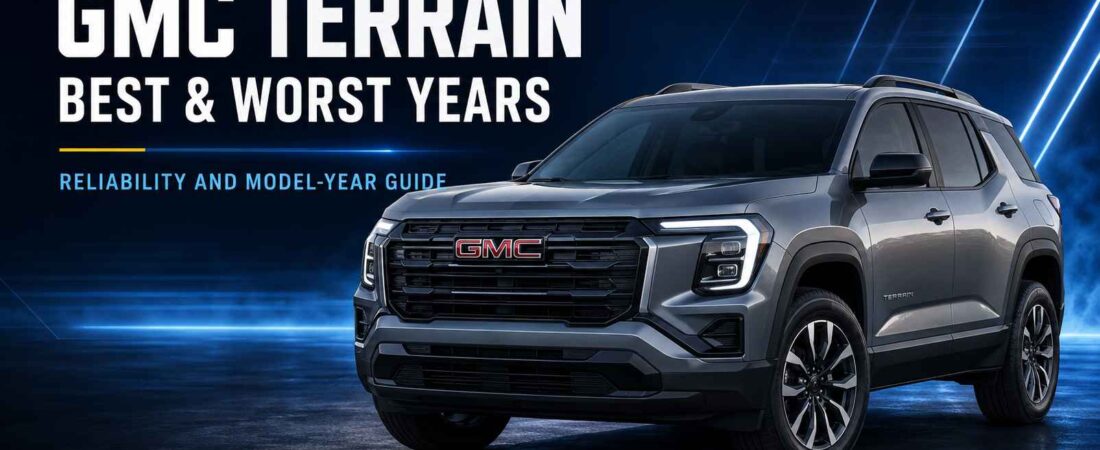
The GMC Terrain looks like a safe choice. It has a roomy cabin, strong crash-test results and a price that usually undercuts the Honda CR-V and Toyota RAV4. But the used Terrain market is split down the middle. Some model years are quiet, dependable family SUVs, while others carry one of the most expensive engine problems in the compact SUV class. Choosing the best year for GMC Terrain matters more than almost any other decision you will make on this vehicle.
The short version: the early cars from 2010 to 2012 are the ones to avoid, the 2.4L four-cylinder engine is a risk in every first-generation year, and the 2020 to 2024 models are the best Terrains you can buy used. In this guide, AutoPeeky ranks every Terrain model year using owner complaint data, engine history, recall information and typical used prices, so you can see the GMC Terrain best and worst years side by side.
Before you look at a specific vehicle, run it through our Should I Buy? tool. Enter the year, make and model and you get an instant look at that vehicle’s NHTSA complaint history and open recalls.
Best Year for GMC Terrain at a Glance
Here is AutoPeeky’s ranking for every Terrain model year sold in the US:
| Generation | Best years | Neutral years | Years to avoid |
| First generation (2010-2017) | None | 2013 to 2017, 3.6L V6 only | 2010, 2011, 2012, and any 2.4L four-cylinder |
| Second generation (2018-2024) | 2020, 2021, 2022, 2023, 2024 | 2018, 2019 | None |
| Third generation (2025 and newer) | Too new to rank | Too new to rank | Too new to rank |
The quick answer: the best year for GMC Terrain is 2022, with 2020, 2021, 2023 and 2024 close behind. If your budget calls for something older, a 2016 or 2017 with the 3.6L V6 is the best first-generation choice. Skip the 2010, 2011 and 2012, and avoid any 2.4L four-cylinder Terrain regardless of year.
GMC Terrain Generations and Engines
The Terrain debuted for the 2010 model year as the replacement for the Pontiac Torrent, and it shares most of its chassis and powertrain with the Chevrolet Equinox. For a Terrain buyer, the engine under the hood often matters more than the model year.
| Generation | Years | Engines | What to know |
| First generation | 2010 to 2017 | 2.4L four-cylinder (182 hp), 3.0L V6 (264 hp, 2010 to 2012), 3.6L V6 (301 hp, from 2013) | The 2.4L and 3.0L have serious reliability problems |
| Second generation | 2018 to 2024 | 1.5L turbo (170 hp), 2.0L turbo (252 hp, through 2020), 1.6L diesel (2018 and 2019) | Much cleaner record, nine-speed automatic |
| Third generation | 2025 onward | 1.5L turbo (175 hp) | New design, no hybrid option |
GMC Terrain Best and Worst Years: First Generation (2010-2017)
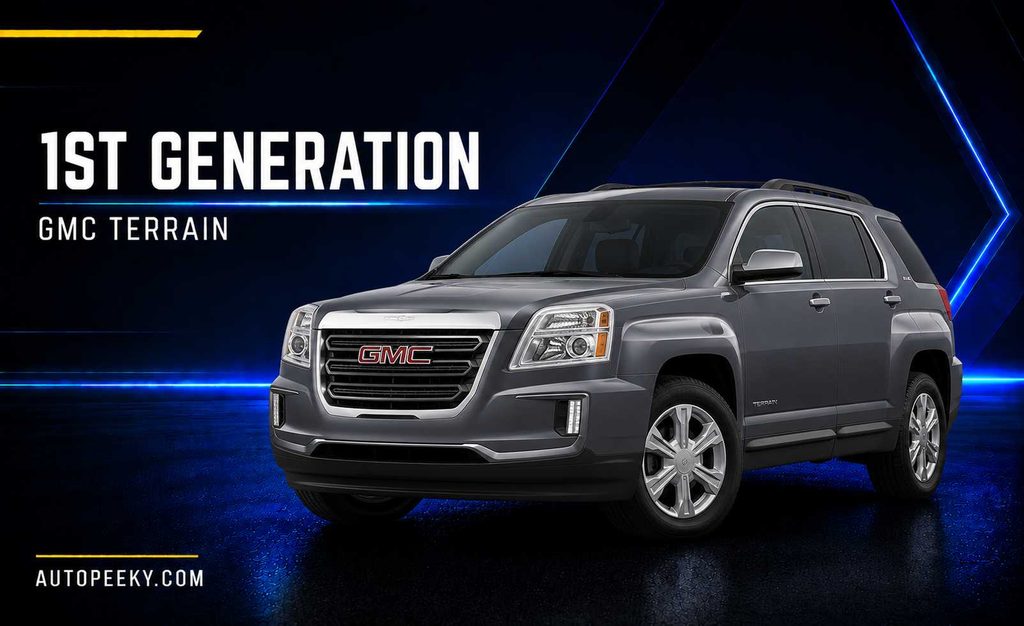
The first-generation Terrain was popular, but it is the source of nearly all the model’s reliability complaints. As CarGurus puts it, any Terrain from 2010 to 2017 with the 2.4L four-cylinder or 3.0L V6 is best avoided.
Worst Years: 2010, 2011 and 2012
These three years are the clear years to avoid. According to CarComplaints.com, 2011 has the most complaints of any Terrain at 151, followed by 2010 at 122 and 2012 at 93. The 2011 is also the site’s worst-rated year on repair cost and mileage at failure.
The problems that define this period:
- Excessive oil consumption. The leading complaint for the 2011 and 2012 2.4L engine. CarComplaints puts the average repair on a 2011 at about $5,100, typically around 93,000 miles. For 2012 the figure is about $3,000 at roughly 101,000 miles.
- Timing chain wear. The 2.4L can develop stretched timing chains, and trouble codes P0016 and P0017 are the usual warning signs. Failures have been reported well before 100,000 miles.
- Transmission failure. For 2010, CarComplaints lists transmission failure as the second most-reported problem, costing around $3,600 at about 86,000 miles.
- Weak alternatives. The optional 3.0L V6 in these years has its own reliability issues, so it is not an escape route from the 2.4L.
Class-action lawsuits and service bulletins surround the oil consumption problem, and CarGurus advises steering clear of these years altogether. Used prices of around $6,000 for a 2010 may look tempting, but the repair risk outweighs the saving.
2013 to 2015: The V6 Decides
In 2013, GM replaced the 3.0L V6 with a 3.6L V6 making 301 horsepower, and it is the one first-generation engine without a reputation for serious problems. The 2.4L four-cylinder carried over, so these years split in two: a 3.6L car is a reasonably used buy, while a 2.4L car carries the same oil consumption and timing chain risk as the earlier years.
Complaint counts stayed elevated at 71 for 2013, 78 for 2014 and 76 for 2015. The 2013 also added the first Denali trim. Treat the 2013 to 2015 as neutral and buy only a 3.6L V6 with full service records.
2016 and 2017: The Best Older Choice
The late first-generation cars show a sharp drop in complaints, with 20 for the 2016 and 26 for the 2017 on CarComplaints. Combined with the 3.6L V6, they are the best-value older Terrains. The 2014 and later models also earned an IIHS Top Safety Pick+ rating for the 2014 model, and IIHS lists later cars among its good used choices for teen drivers.
One thing to check: all first-generation Terrains (around 740,000 vehicles) were recalled in 2022 for headlights that were too bright. Confirm the work was done using our VIN and Recall Check.
Best Year for GMC Terrain: Second Generation (2018-2024)
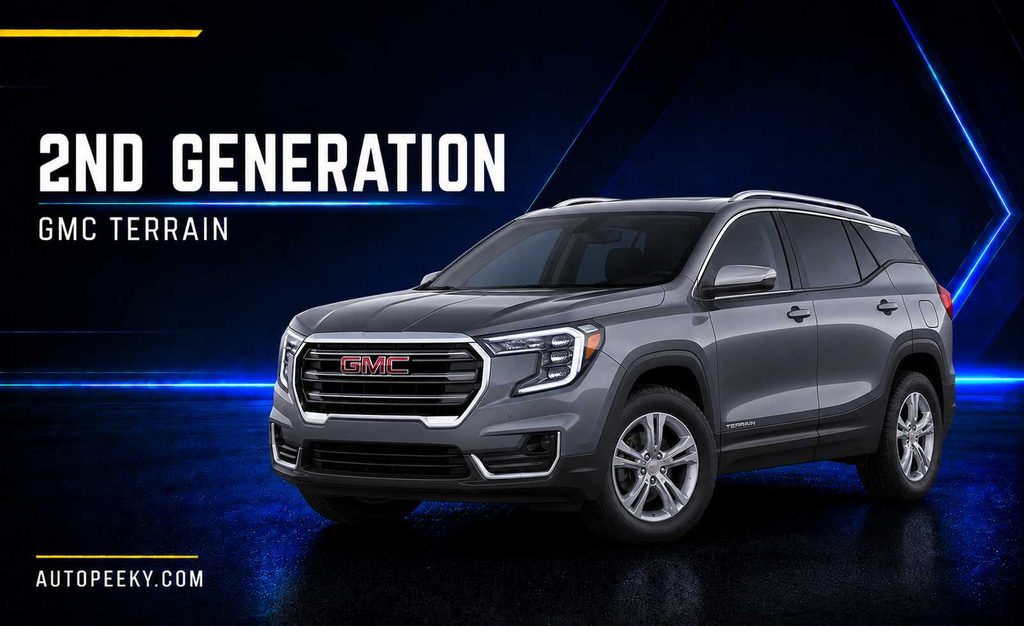
The redesigned Terrain arrived for 2018 with a lighter body, new turbocharged engines and a nine-speed automatic. It dropped the troubled 2.4L entirely, which is the single biggest reason this generation is a safer buy. CarGurus notes that no Terrain sold in America has received a below-average reliability ranking from RepairPal, and that CarComplaints rates the 2020 to 2024 models as the most dependable.
2018 and 2019: Good, Not Great
These two years are neutral. Complaints are low (24 each on CarComplaints) and there is no data showing the first year of the redesign is a particular problem. Still, they are the earliest cars with the new engines and transmission, and complaint counts are higher than the 2020 to 2024 cars. They also offered an uncommon 1.6L diesel rated at 28 city and 39 highway mpg, which is excellent on the highway but hard to find and may need extra emissions servicing. Expect to pay about $14,700 for an average 2018 and $16,300 for 2019, according to CarGurus.
2020 to 2024: The Best Years for GMC Terrain
This is where the Terrain becomes an easy recommendation. Complaints on CarComplaints are almost nonexistent: 2 each for 2020, 2021 and 2022, none for 2023 and 1 for 2024. Newer cars have had less time to collect complaints, so read those figures as encouraging rather than conclusive, but they point the same way as RepairPal and CarGurus.
What each year brings:
- 2020: Automatic emergency braking, forward collision alert, lane-centering, lane departure warning and front pedestrian braking became standard. It was also the last year for the 2.0L turbo, and the Denali was the only one to combine that 252 horsepower engine with the upgraded suspension.
- 2021: The 2.0L was dropped, leaving the 1.5L turbo as the only engine. A strong value choice, and a five-year-old 2021 averages about $18,900.
- 2022: A refresh added the rugged AT4 trim, wireless Apple CarPlay and Android Auto and an available head-up display. This is AutoPeeky’s top pick for the combination of low complaints and modern tech.
- 2023 and 2024: Little changed, which is good news. Average used prices are around $25,000 for both, so you pay a premium for age.
The 1.5L turbo (26 city, 30 highway, 28 combined mpg) is enough for most buyers, but towing is limited to 1,500 pounds. If you need up to 3,500 pounds, look for a 2018 to 2020 Terrain with the 2.0L. To see what either engine costs at the pump, use our Fuel Cost Calculator.
What About the 2025 and Newer GMC Terrain?
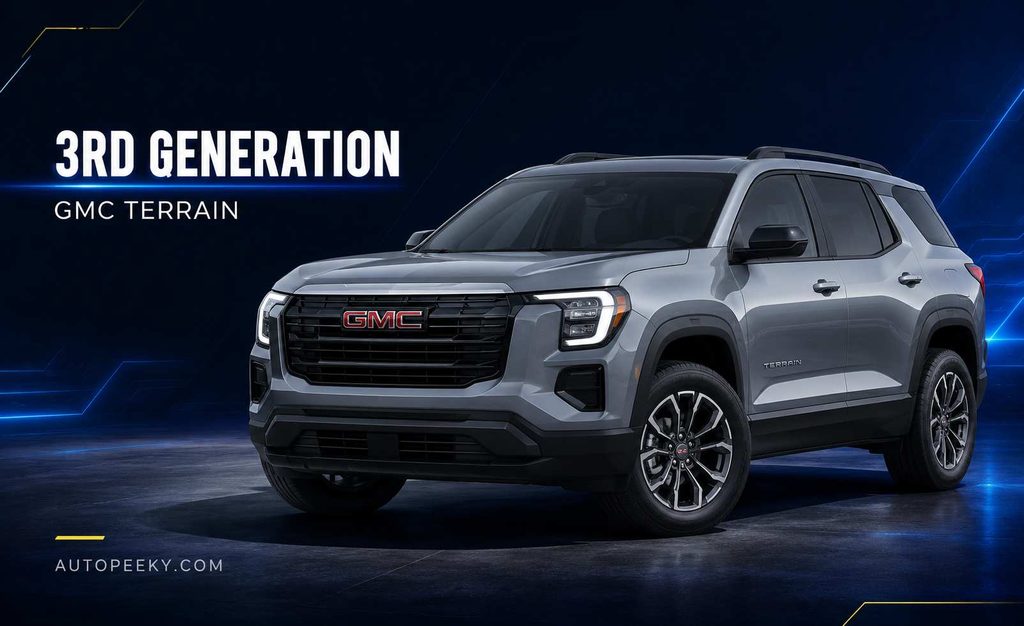
GM redesigned the Terrain again for 2025, with new styling, a large 15-inch touchscreen and a single 1.5L turbo with 175 horsepower. Conventional wisdom says to avoid the first year of a redesign, but CarGurus found no data suggesting 2025 is less reliable than other years. It is too early for AutoPeeky to rank it, so treat it as a wait-and-see option. There is also no hybrid version, which is a gap against the RAV4 and CR-V.
GMC Terrain Year-by-Year Summary
| Year | Rating | CarComplaints count | Key notes |
| 2010 | Avoid | 122 | Transmission failure, 2.4L and 3.0L engine risk |
| 2011 | Avoid | 151 | Worst year, oil consumption around $5,100 to fix |
| 2012 | Avoid | 93 | Oil consumption, timing chain wear |
| 2013 | Neutral | 71 | 3.6L V6 only, 2.4L still risky |
| 2014 | Neutral | 78 | 3.6L V6 only, IIHS Top Safety Pick+ |
| 2015 | Neutral | 76 | 3.6L V6 only |
| 2016 | Neutral | 20 | Best older value with the V6 |
| 2017 | Neutral | 26 | Best older value with the V6 |
| 2018 | Neutral | 24 | Redesign debut, new engines |
| 2019 | Neutral | 24 | Diesel option, solid used value |
| 2020 | Best | 2 | Standard safety tech, last year of the 2.0L |
| 2021 | Best | 2 | 1.5L only, strong value |
| 2022 | Best | 2 | Top pick, wireless CarPlay, AT4 trim |
| 2023 | Best | 0 | Clean record, higher used price |
| 2024 | Best | 1 | Newest and cleanest used option |
Common GMC Terrain Problems and What They Cost
| Problem | Where it shows up | What to look for | Reported cost |
| Excessive oil consumption | 2010-2017 2.4L | Low oil between changes, blue smoke | About $3,000 to $5,100 (CarComplaints) |
| Timing chain stretch | 2010-2017 2.4L | Rattle at startup, codes P0016 and P0017 | Varies, get a quote |
| Transmission failure | 2010 | Slipping, harsh shifts | About $3,600 (CarComplaints) |
| Headlight recall | 2010-2017 | Overly bright headlights | Free recall repair |
| Automatic hesitation | Some second-generation cars | Shudder or hesitation on a test drive | Varies |
What a Used GMC Terrain Costs
CarGurus reports that the Terrain does not hold its value as well as the CR-V or RAV4, which is good news for used buyers. Average listing prices in mid-2026 run from about $6,000 for a 2010 to $11,333 for a 2017, $14,722 for a 2018, $16,329 for a 2019, $23,096 for a 2022, $24,990 for a 2023 and $25,201 for a 2024.
Those are averages and will shift, so check local listings and use the Used Car Price Estimator as a starting point for negotiation. A few more ways to put numbers on your decision:
- Run the 5-Year Ownership Cost Calculator for a cheap 2.4L car against a newer 2021 or 2022. The cheaper car often loses once a big engine repair is included.
- Project resale with the Depreciation Calculator.
- Check what fits your budget with the Car Affordability Calculator and the Monthly Payment Calculator.
How to Check a Used GMC Terrain Before You Buy
- Confirm the engine. On a 2010 to 2017 car, find out whether it has the 2.4L, 3.0L or 3.6L. Do not rely on the listing alone.
- Run the VIN. Use our VIN and Recall Check for live NHTSA recall data, or search the NHTSA recalls database yourself. It covers recalls only, not accident or title history.
- Ask for oil change records. On a 2.4L, long gaps or a low dipstick are a reason to walk away.
- Listen at a cold start. A rattle or chain noise points to timing chain wear.
- Test the transmission. Look for slipping, harsh shifts or shudders.
- Scan for codes. P0016 and P0017 on a first-generation 2.4L are red flags.
- Get an independent inspection from a mechanic who does not work for the seller.
GMC Terrain Versus Its Rivals
The Terrain’s weak points are cargo space (30 cubic feet behind the seats, against 69.8 maximum for the RAV4 and 76.5 for the CR-V) and the lack of a hybrid. If efficiency matters, our guide to the best and worst Toyota Venza years covers a hybrid crossover that returns far better mpg. For a closer rival, see the best and worst Nissan Rogue years, which shows a similar pattern of weak early years and stronger recent ones.
If you are comparing GM products, our guide to the best and worst Buick Encore years shows how much the model year matters on a smaller GM crossover too.
Final Verdict: The Best Year for GMC Terrain
The best year for GMC Terrain is 2022, with 2020, 2021, 2023 and 2024 all strong alternatives. These cars have the cleanest complaint records, standard safety technology and none of the engine problems that hurt the first generation. If you want to spend less, a 2016 or 2017 with the 3.6L V6 is the best older Terrain, and a 2018 or 2019 is a reasonable middle option.
Avoid the 2010, 2011 and 2012 entirely, and do not buy any first-generation Terrain with the 2.4L four-cylinder. These rankings come from published data, not hands-on testing, so treat them as a starting point. Before you buy, check the VIN with the VIN and Recall Check, run the exact year through Should I Buy? and get an independent inspection. Have a question about a specific Terrain year or trim? Leave it in the comments and the AutoPeeky team will take a look.
Frequently Asked Questions
What is the best year for GMC Terrain?
The best year for GMC Terrain is 2022. It has very few complaints, wireless Apple CarPlay and Android Auto, and standard safety technology. The 2020, 2021, 2023 and 2024 are also excellent. For an older, cheaper option, choose a 2016 or 2017 with the 3.6L V6.
What is the best year for a used GMC Terrain?
For a used buyer balancing price and reliability, the 2021 and 2022 are the sweet spot. A five-year-old 2021 averages around $18,900, and both years have almost no complaints on CarComplaints.com.
Which GMC Terrain years should I avoid?
Avoid 2010, 2011 and 2012. Also avoid any 2010 to 2017 Terrain with the 2.4L four-cylinder, which is prone to oil consumption and timing chain problems. 2011 is the worst, with the most complaints and an average repair of about $5,100.
Is the GMC Terrain reliable?
In the right years, yes. RepairPal has never rated a US Terrain below average, and the 2020 to 2024 models have the best complaint records. Early first-generation cars with the 2.4L and 3.0L engines are the main exception.
What GMC Terrain best years have the fewest problems?
According to CarComplaints.com, the 2020 to 2024 model years have the fewest complaints, with no more than 2 each. Newer cars have had less time to collect complaints, but the pattern matches other data.